

News & Updates
Landing After Midnight: Late-Night Border Crossings and Airport Transfers in Hong Kong

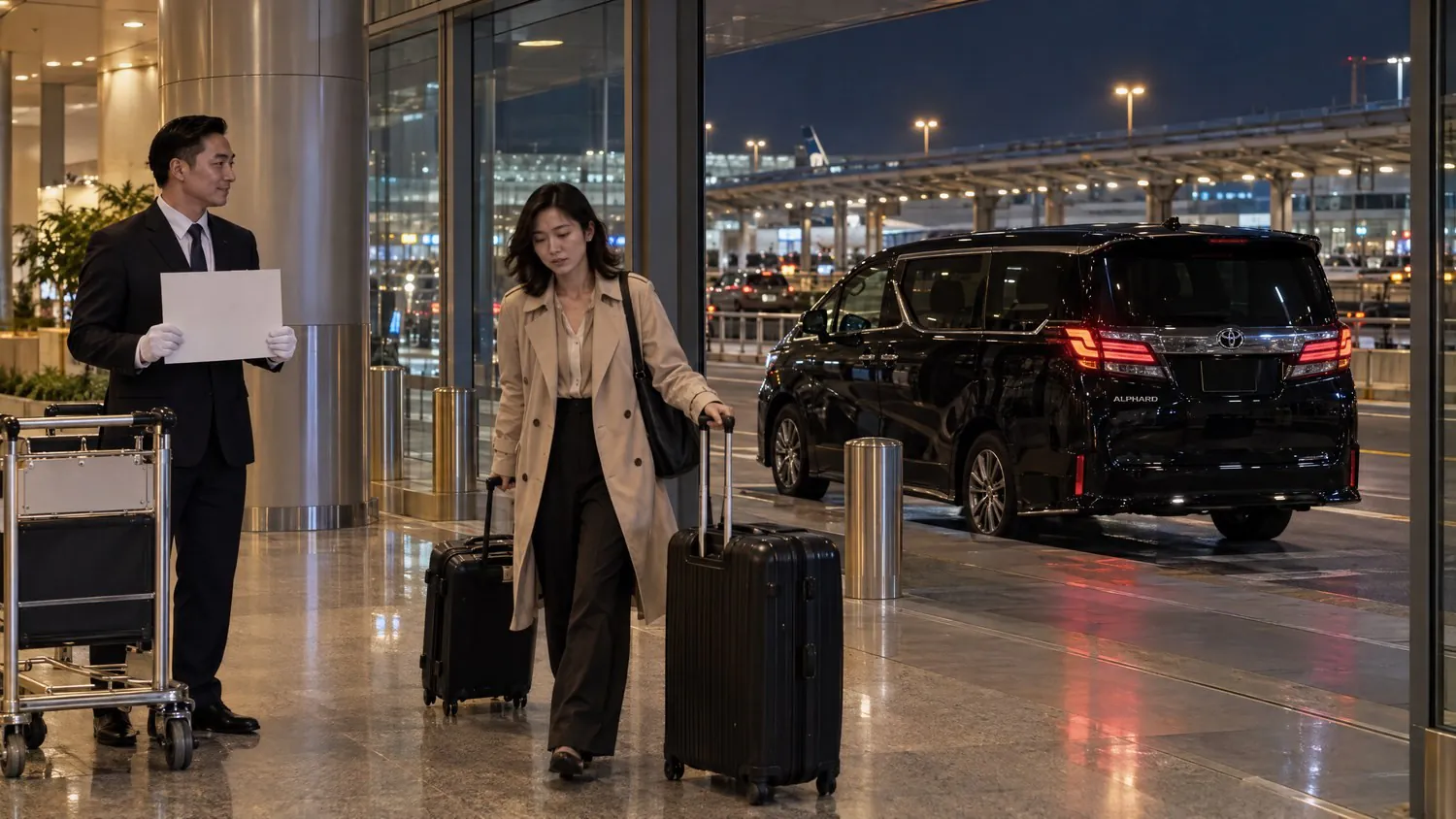
Figure 1. After the red-eye flight arrives in Hong Kong, the point-to-point transfer service meets passengers in the arrival hall and takes them directly to the hotel or port.
Three different late-night situations
It is 1:30 a.m. and the aircraft has just landed. Only a handful of people are left at the baggage carousel. The last Airport Express train has already gone, the overnight buses require a change in Central or Tsim Sha Tsui, and if your destination is Shenzhen, the Shenzhen Bay Port closed at midnight. At that moment, there is really only one question worth answering: is there still a car that can take me safely and directly to my hotel?
The difficulty of travelling late at night is not distance. It is that the options disappear one by one. Public transport stops running, border crossings close, and ride-hailing apps may simply have no driver nearby. Any single failure turns a slightly late arrival into an arrival that does not happen tonight.
The three late-night situations also have different constraints. A red-eye arrival raises the question of how to get out of the airport. An early-morning departure raises the question of when to leave home. A late-night trip north or an after-midnight return to Hong Kong raises the question of which control point is still open. Knowing which situation you are in makes the planning far clearer.
Border crossing hours described here follow official announcements and should be re-checked before travel. Service arrangements and quotations are confirmed by our team on the day of travel.
Only a few control points operate overnight
There are more than seven land crossings between Hong Kong and Shenzhen, but only two operate around the clock: the new Huanggang Port and the Hong Kong–Zhuhai–Macao Bridge Hong Kong Port. The others close between 10 p.m. and midnight. Shenzhen Bay Port stays open until midnight, but its passenger clearance is not overnight, and the roads leading to it are closed about thirty minutes before it shuts, so the practical cut-off is earlier than midnight.
| Control point | Passenger clearance hours | Notes |
| New Huanggang Port | 24 hours | Opened 12 October 2026; joint inspection with single release |
| HZMB Hong Kong Port | 24 hours | Three locations, three checks; for Zhuhai and Macao |
| Shenzhen Bay Port | 06:30–24:00 | Freight runs 24 hours; roads close about 30 minutes before shutdown |
| Lo Wu | 06:30–24:00 | Rail-based crossing |
| Futian Port | 06:30–22:30 | Connects to the Shenzhen metro |
| Liantang / Heung Yuen Wai | 07:00–22:00 | Cross-border private cars need a booking quota |
| Man Kam To | 07:00–22:00 | Mainly coaches and goods vehicles |
In practice, at two in the morning there is only one crossing into Shenzhen, the new Huanggang Port. For Zhuhai or Macao, the bridge is the route. Planning around the question of whether a crossing is open, without asking until what time, is how the last leg of a journey goes wrong.
Three ways out of the airport after a red-eye flight
Overnight buses: cheapest, but you will change vehicles
The airport night bus network includes N11 to Central (Macau Ferry), N21 to Tsim Sha Tsui and N26 towards Yau Tong and Tung Chung, departing the airport roughly between 1:50 a.m. and 4:50 a.m. Fares are low and luggage racks are adequate, but the routes mainly serve Hong Kong Island, Kowloon and Tung Chung, so a further transfer or taxi is usually needed. This suits travellers with light luggage and no tight schedule.
Airport Express: you must beat the last train
The last Airport Express train leaves the airport at 00:48, and the first train towards the airport departs around 05:50. A flight landing before 11 p.m. can still make it if immigration and baggage go smoothly. If the flight is delayed or bags are slow, that option is gone. For late arrivals, the Airport Express is valuable because it is predictable, but only when the timing works.
Point-to-point transfer: someone waits even when the flight is late
The decisive difference with a pre-booked transfer is that the driver tracks the actual landing time against the flight number. A delay does not leave you waiting for nothing, and a missed last train does not leave you without options. For travellers with elderly parents, young children, a lot of luggage, or a destination in Shenzhen, Macao or Zhuhai, that certainty matters most in the small hours, because at that hour there is no second chance.
Early-morning departures: work backwards from the flight
Take a 7:30 a.m. flight. The usual advice is to reach the airport three hours before departure, so before 4:30 a.m. at the terminal. From the urban areas that is a thirty to sixty minute drive, and although the roads are empty at that hour, finding a car is not easy. A realistic departure from home is therefore around 3:30 a.m.
Night buses still run then, but services are sparse and you first have to reach the bus stop. With luggage, that stretch is often harder than the drive itself. If elderly relatives or children are travelling too, a booked transfer removes the loading, searching and transferring in one step, and removes the risk of missing the flight altogether.
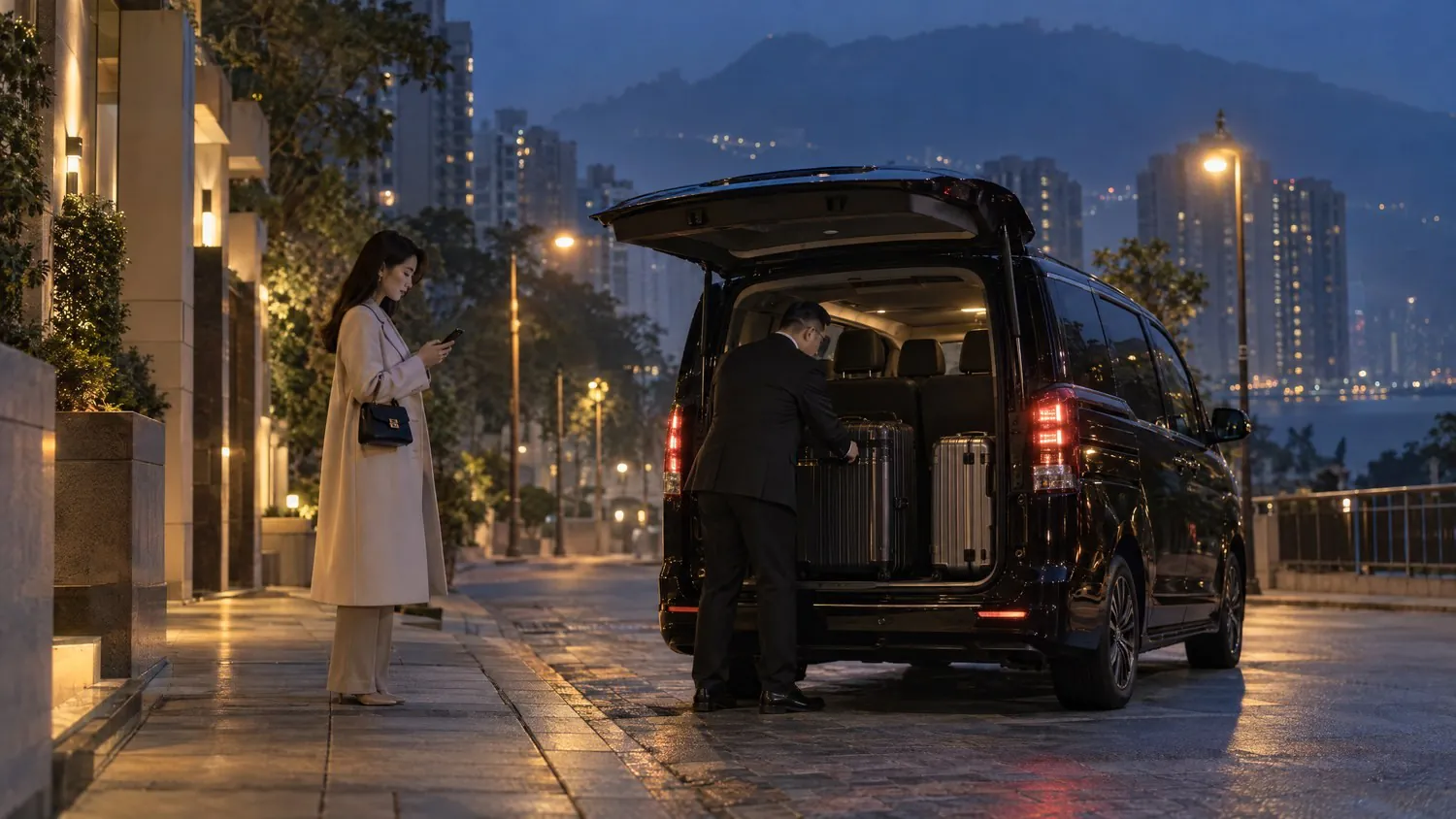
圖 3.清晨出發前,司機在住所樓下協助裝載行李;凌晨路面順暢,但公共交通班次疏落。
Going north late, coming home after midnight
Many Hong Kong residents stay in Shenzhen until late, or land on a night flight and head straight north. At that hour the constraint is not driving time but which control point is open. Since it opened on 12 October 2026, the new Huanggang Port has provided 24-hour passenger and passenger-vehicle clearance using a joint inspection, single release model, replacing the previous passenger arrangements via Lok Ma Chau. The HZMB Hong Kong Port continues to operate 24 hours for Zhuhai and Macao.
One practical warning: Shenzhen Bay Port is not overnight, and the roads to it close about thirty minutes before shutdown. If a flight lands after 11 p.m., a plan built around Shenzhen Bay has to switch to the new Huanggang Port or the bridge, so it is worth preparing that alternative before departure.
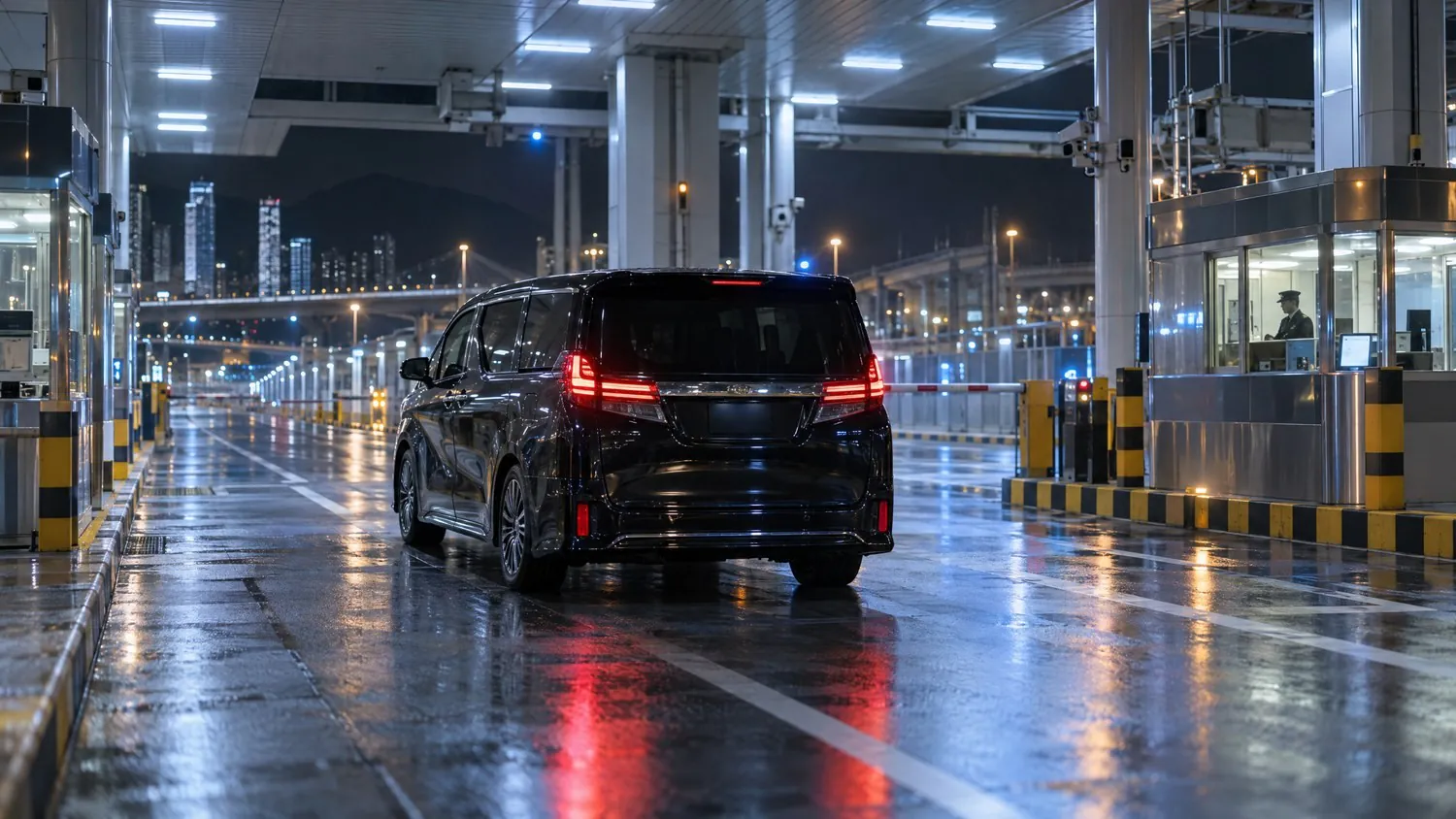
圖 2.深夜時段的口岸車道:凌晨仍運作的口岸有限,出發前先確認當日安排。
The details most people overlook when booking
Agree on the meeting point
The arrivals hall is divided into zones A and B with many exits. Fewer people are around late at night, which paradoxically makes it easier to miss each other. Confirming where the driver will stand with the name sign, and how to reach the driver by phone, is far more useful than a flight number alone. If your party arrives separately, say so in advance.
Understand the waiting time
Flight delays, slow baggage and immigration queues all shift the pick-up time, and late-night flights carry more of that variability. Asking in advance how waiting is handled, and how additional waiting time is charged, prevents disputes after landing.
Declare your luggage
Two cabin bags and four large suitcases need very different cabin and boot space. Late at night, swapping to a larger vehicle is not always possible. Stating the number and size of bags at booking, including strollers, wheelchairs, golf bags or musical instruments, is the most practical step you can take.
Road closures before a port shuts
Shenzhen Bay closes its approach roads about thirty minutes before the port shuts, so cutting it fine carries real risk. For an overnight journey, calculate the port's practical last entry time together with any likely flight delay.
When a late-night transfer is worth booking
If children or elderly relatives are travelling, if luggage is substantial, if the destination is Shenzhen, Macao or Zhuhai, or if the next morning holds a meeting or an exam that cannot be missed, a booked late-night transfer is more dependable than finding a car on arrival. If you are travelling alone with light luggage and staying on Hong Kong Island or in Kowloon, the night buses plus a taxi remain a reasonable option.
Tiger Limo provides 24-hour pre-booked transfers with door-to-door service in a Toyota Alphard or Mercedes-Benz V-Class, scheduling the driver around your flight time. For departures in the small hours or arrivals after midnight, booking early and providing the flight number, luggage count and exact pick-up and drop-off points allows the team to plan the route and control point in advance.
References
[1] Hong Kong Security Bureau: cross-boundary control point hours: https://www.sb.gov.hk/eng/bwt/status.html
[2] Shenzhen Port Office: port clearance services: https://ka.sz.gov.cn/bmfw/katgfw/
[3] Hong Kong Security Bureau: new Huanggang Port: https://www.sb.gov.hk/eng/hg/index.html
[4] HZMB Hong Kong section: 24-hour clearance: https://www.hzmb.gov.hk/
[5] Hong Kong International Airport: Airport Express: https://www.hongkongairport.com/en/transport/to-from-airport/airport-express.page
[6] Citybus: airport overnight bus routes (N11 / N21 / N26): https://www.citybus.com.hk/routes/airport-bus/route/index.aspx