

News & Updates
The 24-Hour Document Check Before You Cross the Border: Home Return Permits, e-Channels, Children and Foreign Passengers

When people book a cross-border car, they ask about price, vehicle type and which control point to use. What actually cancels a trip is usually paperwork: the driver is already waiting downstairs when you discover your child's Home Return Permit expired last year, or the family is in the car before anyone remembers that the domestic helper has no valid mainland visa.
A car can be arranged the same day. A travel document cannot be replaced the same day. This article works through the people travelling with you, one by one, and sets out what to check in the final 24 hours, together with the latest arrangements for Hong Kong e-Channels and mainland automated gates.
No fixed prices are given here. Every itinerary and quotation depends on the date, pick-up point, number of passengers, luggage and conditions at the control point on the day. Please confirm the final itinerary and quotation with our service team before departure.
Home Return Permit: check the expiry date first, then the renewal queue
The Mainland Travel Permit for Hong Kong and Macao Residents, known as the Home Return Permit, is valid for five years if the holder is under 18, and ten years from the age of 18. The advice from China Travel Service is blunt: if the permit has expired, or has less than six months of validity left, renew it as soon as possible so that a busy application period does not put your trip at risk.
Renewal works the same way as a first application. You book online, then attend a China Travel Service document centre in person; there is no walk-in service. Applicants under 18 must be accompanied by a legal guardian, with proof of relationship such as a birth certificate and the guardian's own identity document. The fee is HK$260 for a five-year permit and HK$390 for a ten-year permit, and the centres offer a compliant photo service for around HK$50.
In practice, the case that catches people out is a permit that has not expired but soon will. If your trip is already booked and the document has only three or four months left, deal with it before you travel. Online appointment slots often run weeks ahead, and a discovery one week before departure is usually too late.
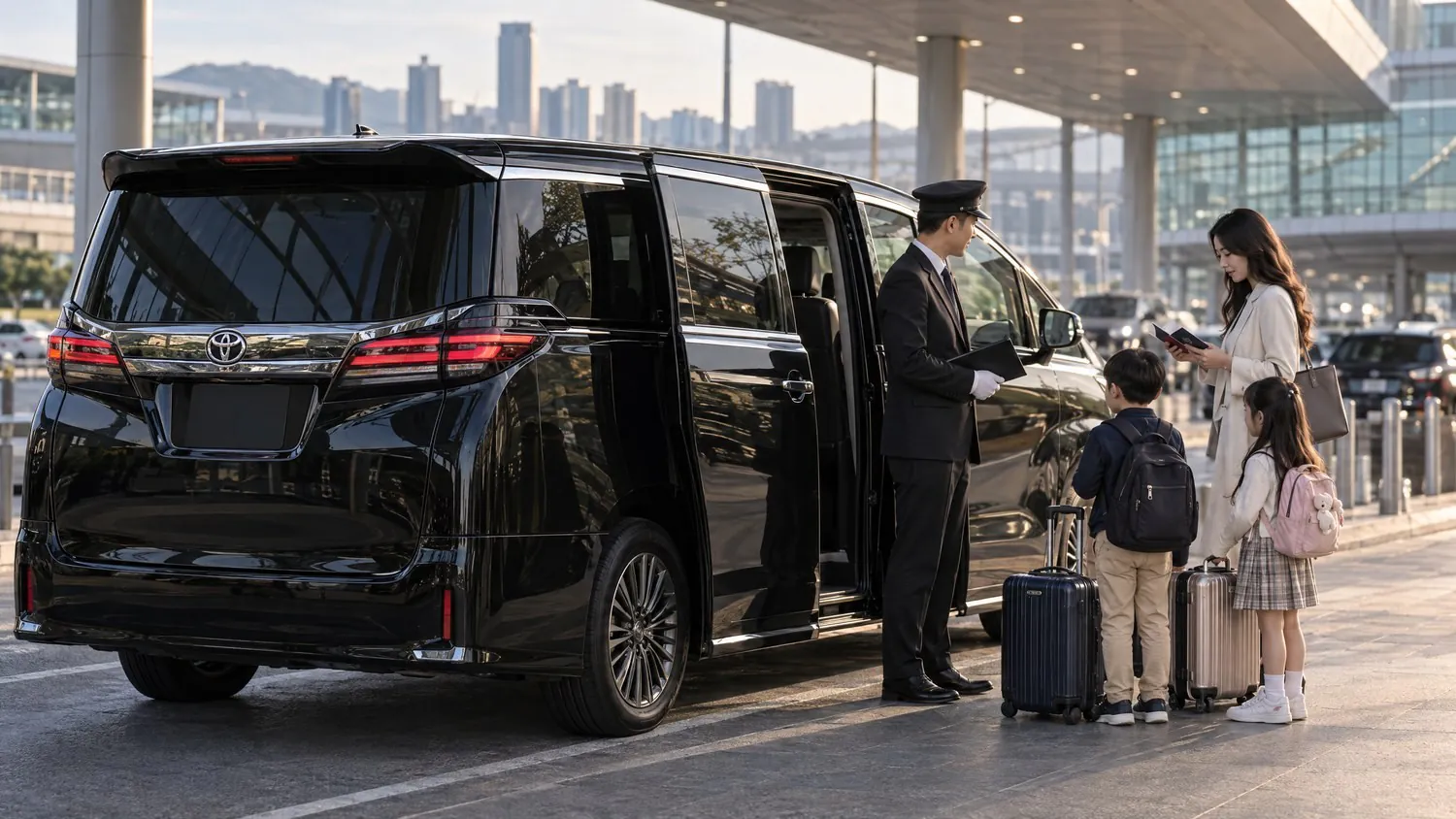
Figure 1. Cross-border transfers normally pick up and drop off outside the terminal. Checking documents in advance saves a return trip at the border.
Automated gates: once enrolled, clearance time becomes a different story
Hong Kong Immigration's e-Channels are open to eligible Hong Kong residents aged 11 and above. Since 31 March 2025, eligible Hong Kong permanent residents aged 7 to 10 may also use them at control points. Cross-boundary pupils under 11 who attend primary school, are at least 1.1 metres tall and hold a valid travel document can use the dedicated pupil e-Channels at Lo Wu and Lok Ma Chau Spur Line once enrolled.
The mainland's automated inspection gates also require enrolment in advance, and children must be at least 7 years old and 1.2 metres tall to apply. Enrolment points exist at various control points with different opening hours, so it is worth confirming before you travel. Enrol once and it serves every future crossing, which makes this the single most worthwhile item to sort out early.
The newer development is at Huanggang. The rebuilt control point is expected to open in the fourth quarter of 2026 and will use a co-location model with 134 automated gates and 68 traditional counters. Enrolled travellers queue once and present their document once to complete both Hong Kong and Shenzhen clearance, cutting the overall crossing time from roughly 30 minutes to about 5 minutes.
On enrolment, eligible Hong Kong residents aged 18 or above can register through Immigration's "HK e-Channel" mobile app, formerly the contactless e-Channel and renamed on 5 October 2026, verifying identity with iAM Smart. For ages 7 to 17, a parent or legal guardian must complete the registration on their behalf. From age 14, enrolment can include facial recognition clearance, which allows the gate to be used without presenting a document.
Without enrolment you join the manual counters. At busy times the difference is substantial, and this is the part of a cross-border trip most likely to blow the schedule.
Children and toddlers: bring every document, and use the right lane
For children under 11 who do not hold a Hong Kong identity card, a Home Return Permit application requires a multiple-entry Re-entry Permit showing a Chinese name. Anyone under 18 must apply with a guardian present. On the day of travel, keep the child's identity card, Re-entry Permit or HKSAR passport in the same bag as the adults' documents rather than spread across different pieces of luggage.
On lanes, Hong Kong e-Channels accept children from age 7, while mainland automated gates require age 7 and a height of at least 1.2 metres; if the child does not qualify, use the manual counter. Children's faces change quickly, so a document photo that no longer looks much like them may attract a few extra questions at the counter. That is normal, and a little extra time covers it.

Figure 2. When children or elderly passengers are travelling, confirm documents and lane arrangements before departure rather than at the border.
Foreign passengers: the group most often overlooked
Non-Chinese Hong Kong permanent residents can apply for the Mainland Travel Permit for Hong Kong and Macao Residents (Non-Chinese). It is valid for five years, allows multiple entries and stays of up to 90 days each, but does not permit work, study or news reporting on the mainland.
Other foreign nationals need a valid passport and must meet visa or visa-free requirements. China currently grants unilateral visa-free entry to more than 50 countries, generally for stays of up to 30 days, alongside 240-hour and 24-hour transit visa-free arrangements. The list of eligible countries and permitted stay lengths change from time to time, so check an official source before departure. Foreign visitors also complete a foreigner arrival card, which can be filled in online in advance.
Domestic helpers deserve a specific mention. A helper holds a Hong Kong identity card, but travel to the mainland still requires a valid visa or an applicable visa-free status; the identity card alone is not enough. This is a common omission in family bookings, and the processing time rarely fits a departure date that is already fixed.
The 24-hour checklist
□ Check the Home Return Permit or travel permit expiry date for every passenger, children included
□ For foreign passengers: passport, visa or visa-free confirmation, and the foreigner arrival card
□ Confirm e-Channel and mainland automated gate enrolment; re-enrol after a document is replaced
□ Decide the control point and check its opening hours, since not all operate around the clock
□ Confirm passenger numbers, luggage count and child seat needs so the right vehicle is arranged
□ Agree the meeting time and pick-up point, and allow time for clearance
The list looks simple, but going through it before leaving usually turns up one or two items that need attention. Photographing the documents and keeping the images on your phone also helps, because if something does go wrong at the border you can explain the situation to the service team immediately.
Questions we are asked most often
Can an expired Home Return Permit be handled at the border on the day? No. Renewal requires an online appointment and an in-person visit to a China Travel Service document centre, with no walk-in applications.
After a document is replaced, must the e-Channel enrolment be redone? Yes. A new document means a fresh enrolment before the automated gates can be used, and cross-boundary pupils must also update their enrolment after changing travel documents.
Can a 7-year-old use the automated gates alone? Yes, but for ages 7 to 17 the enrolment must be completed by a parent or legal guardian. A child under 1.2 metres cannot use the mainland automated gates.
What does a domestic helper need for a trip to the mainland? A passport plus a valid visa or applicable visa-free status, and confirmation of the permitted length of stay.
Can the car company handle the paperwork? No. However, if you provide passenger details when booking, the service team can remind you about documents and control-point arrangements beforehand, and suggest a suitable crossing.
Tiger Limo confirms passenger numbers and document status at the booking stage, and arranges a Toyota Alphard or Mercedes-Benz V-Class for the whole journey according to the control point, timing and luggage. If you have questions about documents or control points, raise them when you book.
References
[1] China Travel Service (Hong Kong): Online appointment for the Mainland Travel Permit for Hong Kong and Macao Residents: https://www.ctshk.com/mep/zh/apply-chinapermit-2/
[2] Hong Kong Immigration Department: e-Channel services for Hong Kong residents: https://www.immd.gov.hk/hkt/services/echannel_residents.html
[3] HKSAR Government press release: Immigration Department launches enrolment for co-location automated gates (6 October 2026): https://www.info.gov.hk/gia/general/202610/06/P2026100600255.htm
[4] Hong Kong Security Bureau: Huanggang Port co-location clearance, "one queue, one inspection": https://www.sb.gov.hk/chi/hg/clearance.html
[5] National Immigration Administration: Mainland Travel Permit for Hong Kong and Macao Residents (Non-Chinese): https://www.nia.gov.cn/n794014/n1050181/n1050484/c1659464/content.html
[6] Chinese embassy and consulate guidance: FAQ on unilateral visa-free policy: https://se.china-embassy.gov.cn/lstz/202511/t20251110_11750027.htm