News & Updates
Kai Tak Cruise Terminal and West Kowloon Station Transfers: The Smoothest Way to Leave Once You Disembark

Arrival is when the trip really begins. A cruise ship docks, a high-speed train pulls in, and in both cases the same thing happens: a large number of people want to leave at the same time, and most of them are carrying more luggage than they arrived with.
Kai Tak Cruise Terminal and Hong Kong West Kowloon Station are both key gateways to the city, but they work in completely different ways. The cruise terminal sits on the waterfront with an open view, yet no MTR line reaches it. The rail station is in the middle of the city, but its pick-up and drop-off points are spread across several levels. Miss these details and you end up standing at the exit for half an hour, or circling twice with your suitcases before you find your car. This guide looks at each location separately, then at what they share: how to arrange a transfer so the first hour after arrival does not use up the energy you need for the rest of the day.
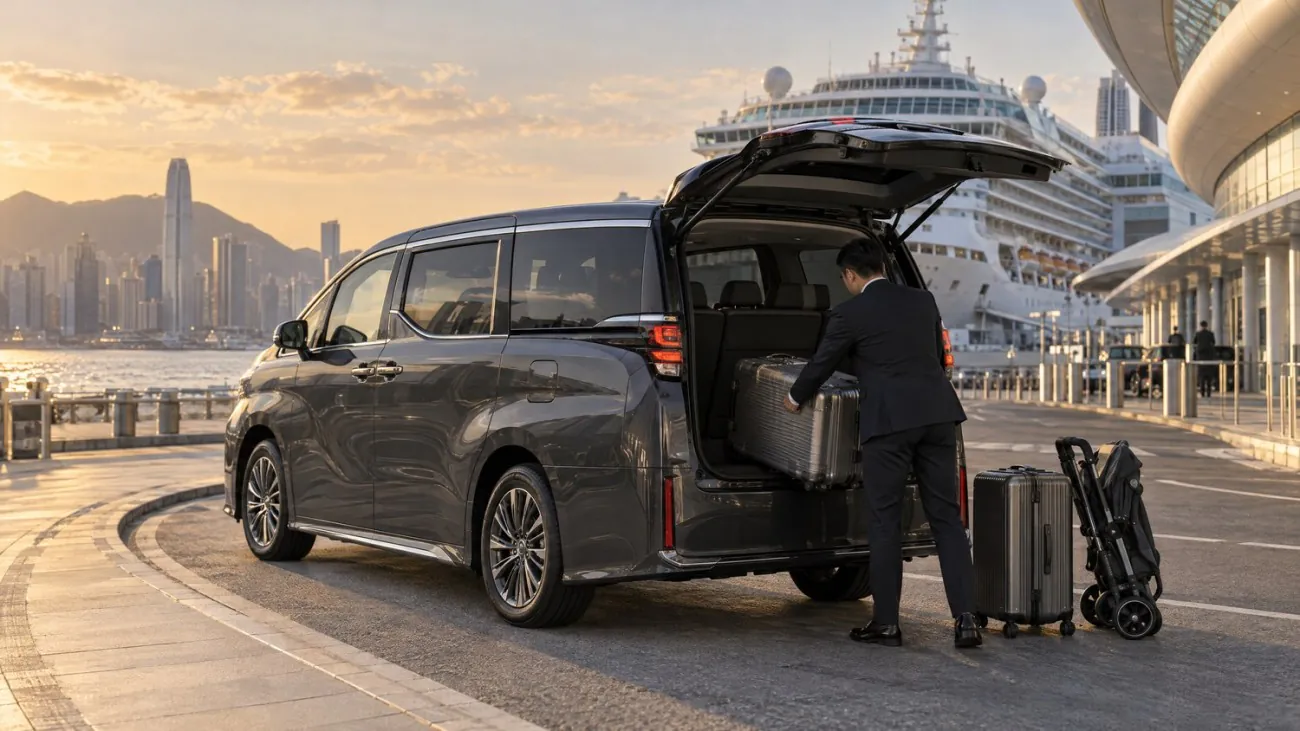
Figure 1. Kai Tak Cruise Terminal: luggage is collected in one area after disembarkation, and the transfer begins the moment you get in the car.
Kai Tak Cruise Terminal: the first hour after disembarkation
Kai Tak Cruise Terminal is located at 33 Shing Fung Road in Kowloon, at the tip of the former Kai Tak airport runway, facing Victoria Harbour. The view is the highlight; the location is what needs planning. No MTR station serves the terminal directly. The nearest stations are Kai Tak, Kowloon Bay and Kwun Tong, and from each of them you still need a bus, a minibus or a taxi. From Central, the drive takes about 20 to 30 minutes depending on traffic.
Passengers disembark in batches, and luggage is collected in the terminal's baggage area. Between queuing to get off the ship, finding your bags and clearing immigration, half an hour to an hour often passes before you actually walk out of the exit hall. At the same time, several hundred to over a thousand passengers all want to leave. Taxi queues, full shuttle buses and cars waiting for app bookings all happen at once. The problem is not a shortage of vehicles, but vehicles and people converging on the same moment.
A few choices make the process much smoother. Set the pick-up time for after you have collected your luggage, not for the ship's published docking time. Choose the terminal's main entrance drop-off area or a designated parking bay as the meeting point rather than the exit hall, which is the most crowded and hardest place to stop. If you are heading straight to Shenzhen, Guangzhou or Macau that day, allow extra time: the drive to the border plus the time spent at the crossing is the real budget.
Public transport at the terminal, and the reality of driving yourself
By public transport, the terminal is served by bus routes 22 and 22M, plus 5R and 20R which run only during specific periods, and a minibus connecting to Kowloon Bay. Taxis can reach the main entrance drop-off area directly.
The free shuttle bus needs a word of caution. On days when a cruise ship is berthed, a free shuttle runs between Kwun Tong apm and the terminal, but it is for cruise passengers and crew only, it does not run every day, and its schedule follows the ship calls. The luggage space on those shuttles is limited, so with two or three large suitcases you will usually find there is not enough room.
If you drive, the terminal has an hourly car park open from 07:00 to 23:00 with about 112 spaces, charged at roughly HK$20 per hour on weekdays and HK$24 at weekends and on public holidays. Spaces are tight during holidays. Self-service lockers are available on the G/F near the Exit Hall and on the 1/F at Atrium A and B, from about HK$12 per four hours, which is useful if you want to store bags before boarding.
West Kowloon Station: work out which level you need
西九龍站就在市中心,交通配套完整,但上落客安排分了幾層,第一次到訪的人容易走錯。
West Kowloon Station is right in the city centre with full transport connections, but its pick-up and drop-off arrangements are split across levels, and first-time visitors often end up in the wrong place. Arriving by taxi, you can be dropped off directly on the station's B1 level. To leave by taxi, the taxi stand is on B2. Pre-booked cars use the Wui Man Road pick-up and drop-off area at the ground-level Exit B. Wui Man Road also serves non-franchised buses, and some hotel shuttles operate in the same area, with the hotel shuttle drop-off near Exit J and the waiting area beside Exits J2 and J3.
The station is linked by footbridges and subways to Austin Station on the Tuen Ma Line, and to Kowloon Station on the Tung Chung Line and Airport Express, so onward MTR connections are easy. During long holidays, however, the station gets extremely busy and vehicles can take a long time to enter and leave the drop-off area. This is where a pre-booked transfer earns its place: the driver knows exactly where to stop and waits according to your train's arrival time, so you are not searching for a car in traffic with your luggage.
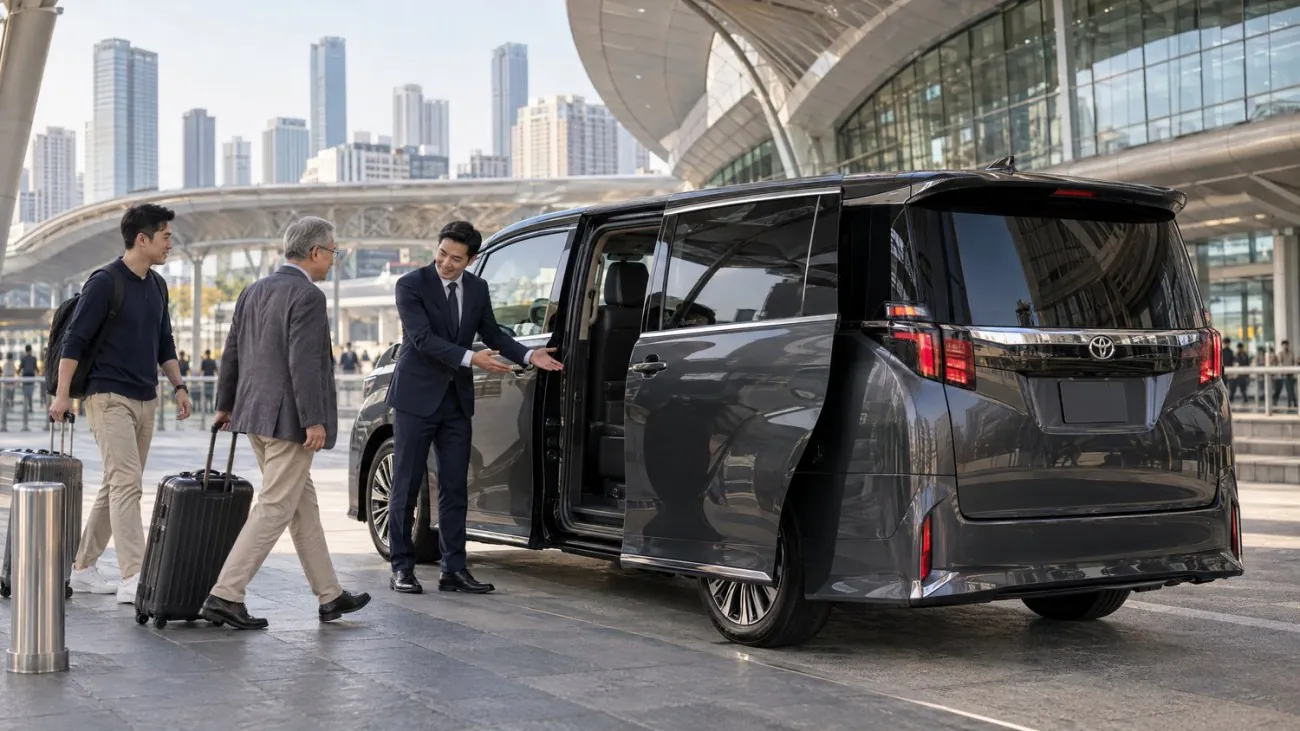
Figure 2. Hong Kong West Kowloon Station: pre-booked cars wait at the ground-level Wui Man Road area, with the driver meeting you according to your train's arrival time.
High-speed rail luggage limits decide what happens after you get off
High-speed rail sets clear luggage rules: adults may carry 20 kg and children 10 kg, and the combined length, width and height of each piece must not exceed 130 cm. There is no luggage check-in service.
In practice, that means passengers travelling with a large musical instrument, a golf bag, a stroller or more than one large suitcase cannot easily manage on their own once they get off. The train can bring you into the city centre, but getting you and your luggage to a hotel, a border crossing or the next city usually calls for someone to meet you.
Three arrival transfers we handle most often
| Scenario | Suggested arrangement | Time budget to note |
| Cruise disembarkation to a Hong Kong hotel | Pick-up at the main entrance drop-off area, with luggage assistance | About 30 to 60 minutes from docking to having all luggage |
| Cruise disembarkation to Shenzhen, Guangzhou or Macau | Door-to-door cross-border transfer, allowing for the border | Driving time plus border processing |
| High-speed rail arrival to a Hong Kong hotel | Pre-booked car waiting at ground-level Wui Man Road | About 15 to 30 minutes from train arrival to exiting the station |
| High-speed rail arrival to the airport or onward cross-border | Pick-up at Exit B on Wui Man Road, direct to the destination | Extra buffer needed when the drop-off area is congested during holidays |
What to tell us when you book
Give us the disembarkation or train arrival time and the flight or train number; the number of passengers and whether anyone is elderly, a child or a wheelchair user; the number of bags and any bulky items such as golf clubs, instruments, a stroller or sample cases; whether the meeting point is the terminal's main entrance or Exit B on Wui Man Road; and whether the journey continues across the border to Shenzhen, Guangzhou, Macau or Zhuhai. Explaining everything at once makes both the arrangement and the quote far more accurate.
If the same day includes a second leg, for example going straight to a mainland city after disembarking, tell us the whole route from the start. The team can then plan the vehicle and timing around the complete journey rather than handling it in separate pieces.
FAQ
Is there an MTR station at the cruise terminal?No. The nearest stations are Kai Tak, Kowloon Bay and Kwun Tong, and you need a bus, minibus or taxi from there.
How soon can I get in the car after disembarking?It depends on the disembarkation batches and how quickly luggage is collected, but usually about 30 to 60 minutes from docking. Set the pick-up time for after you have your luggage, not for the docking time.
Can one car collect cruise passengers and rail passengers on the same day?If the two arrivals are close together, we recommend separate vehicles, or collecting the earlier group first so that neither party is left waiting.
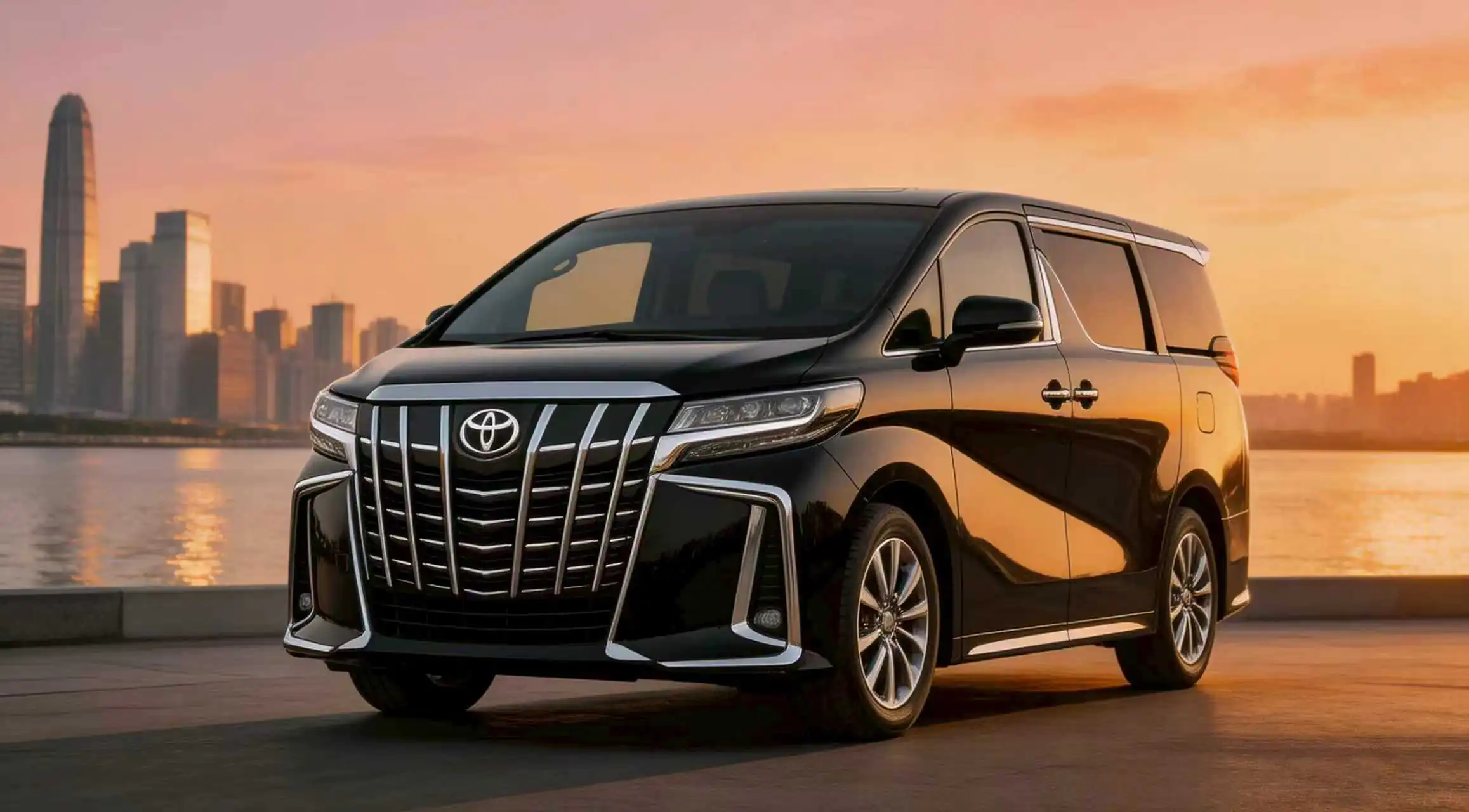
Which vehicle suits a lot of luggage?For two or three passengers with light luggage, a Toyota Alphard has enough space. With more passengers or more bags, a Mercedes-Benz V-Class offers a more generous split of cabin and luggage space.
Keep the first hour after arrival for yourself
Tiger Limo provides door-to-door transfers with vehicles including the Toyota Alphard and Mercedes-Benz V-Class, covering Kai Tak Cruise Terminal, Hong Kong West Kowloon Station, Hong Kong International Airport and cross-border routes across Hong Kong, mainland China and Macau. The driver waits according to your disembarkation or arrival time, meets you at the agreed point and helps with luggage. If your journey continues to Shenzhen, Guangzhou, Macau or Zhuhai, the same car takes you all the way, with no changing vehicles at the border.
Cruise call days and long holidays are when transfer demand peaks, so book early and provide complete journey details to keep the arrangements comfortable.
This article is compiled from public information published by the terminal, the station and public transport operators. Actual arrangements are subject to the latest on-site and official announcements.
References
[1] MTR High Speed Rail: Hong Kong West Kowloon Station (transport connections and pick-up/drop-off locations): https://www.highspeed.mtr.com.hk/en/guide/wek.html
[2] MTR High Speed Rail: Carriage of luggage: https://www.highspeed.mtr.com.hk/en/guide/carriage-of-luggage.html
[3] Kai Tak Cruise Terminal: How to get there: https://www.kaitakcruiseterminal.com.hk/
[4] Transport Department: Access to Hong Kong West Kowloon Station: https://www.td.gov.hk/en/transport_in_hong_kong/land_based_cross_boundary_transport/access_to_hong_kong_west_kowloon_station/index.html