

News & Updates
Three Generations, One Cross-Border Lunch: Fitting an Older Relative's Walking Pace, a Toddler's Nap and the Trip Home into a Single Day


Sunday, half past eight in the morning, and six people get into the car downstairs: two grandparents, the parents, and a three-year-old. The plan is a cross-border run into Shenzhen for lunch, a wander around a mall in the afternoon, and home to Hong Kong before dinner. It sounds simple, but with three generations in one car the rhythms are completely different — the grandparents walk slowly, the toddler needs a nap, and the middle generation spends the day coordinating.
Success rarely depends on where you go; it depends on what happens when.
Three Decisions Before You Set Off
The first is departure time. Leave too early and the child, still half asleep, cries the moment the car pulls away; leave too late and you meet the queues at the border and push lunch back. It is steadier to set off once the child has woken naturally, and to allow a stretch of time for the crossing.
The second is which crossing point to use and where to be dropped off. Older travellers have a limited walking range, so the choice is not only about speed: it is also about the distance from the drop-off point to the immigration hall. Some crossings see fewer people and have shorter walkways, which makes a real difference.
The third is seating in the car. The grandparents need room to sit comfortably, the toddler needs a fixed seat, and the stroller or folding chair should be stored somewhere easy to reach. Settle all three before departure and nobody has to rearrange the boot at the kerb.
Around the Border: Treat Walking Time as Part of the Journey
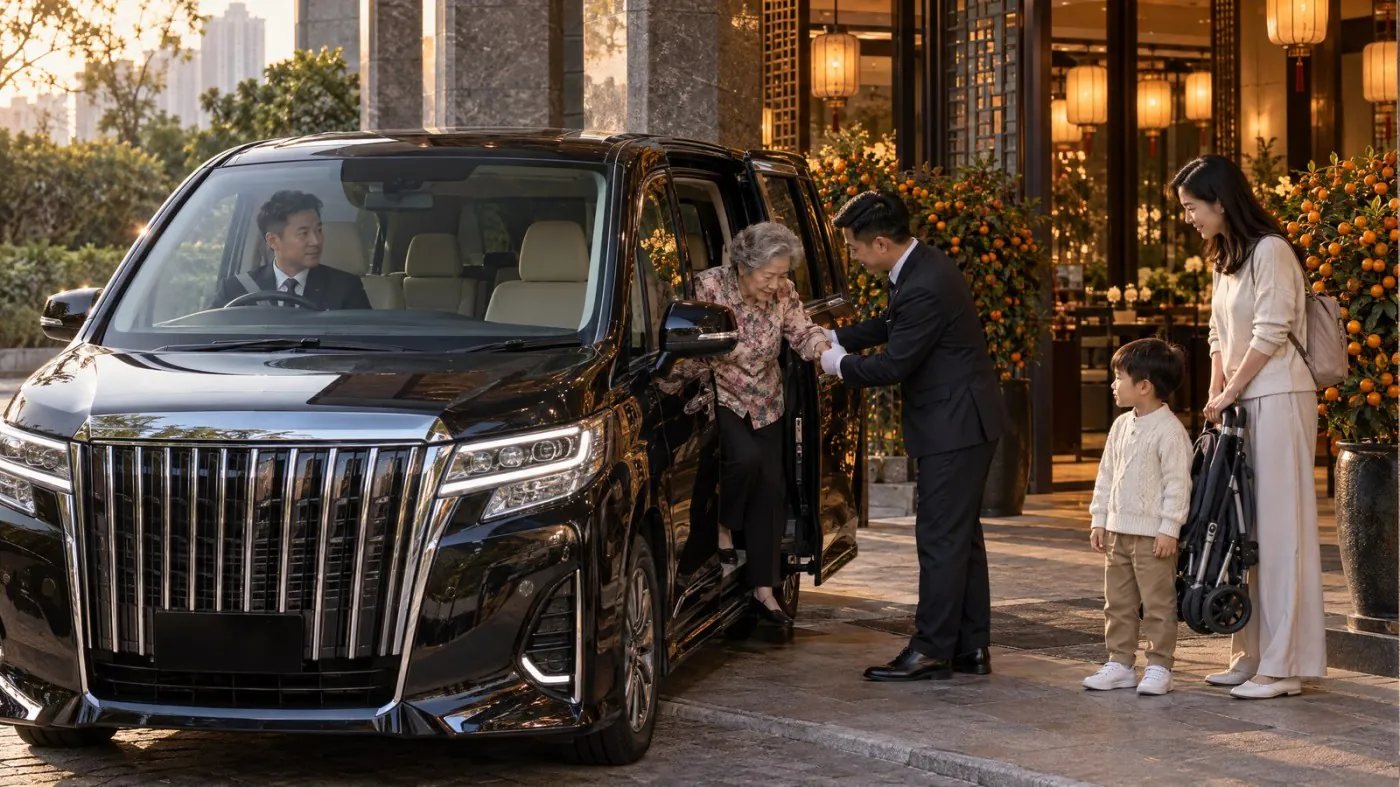
Plenty of people plan a cross-border day by counting driving time and forgetting the walking. For an older traveller, the walk from where the car stops to the immigration counter, and then on to the pickup point on the other side, can easily take a quarter of an hour, with stairs or a slope on the way.
In practice: build a buffer on both sides of the crossing, and ask the driver to stop as close to the entrance as possible. If someone in the party uses a wheelchair or a walking frame, say so in advance so boarding and alighting can be arranged properly. None of this requires special equipment.
Lunch: Choosing a Restaurant Is Really Choosing a Time
Restaurants in Shenzhen usually have a queue at Sunday lunchtime, and waiting with an older person and a small child is the most tiring part of the day. Better to pick somewhere that takes reservations, is not too far away and has a lift to the door, than to chase a famous name that means fifteen minutes on foot and another wait at the end of it.
Keep the meal itself unhurried, too. Three generations eat slowly. Rather than stacking one appointment on top of another, leave half an hour of flexibility on either side of lunch, so a slow kitchen does not push the whole afternoon back.
Protecting the Nap and Trimming the Afternoon
A three-year-old usually needs a sleep after lunch, and that window is the one part of the day worth defending.
The practical trick is to make it a nap in motion: get into the car and take a longer stretch of road so the child falls asleep on board. If the afternoon plan is a mall, choose a leg that is long enough and smooth enough to be worth it, rather than a five-minute hop. The other trade-off is to shorten the afternoon: better to return to the hotel, or to Hong Kong, a little earlier than to squeeze in one more stop.
Dinner and the Journey Home: Slow the Pace by Half a Beat
If lunch was a proper meal, dinner can be lighter, or even eaten back in Hong Kong. The journey home also has to take account of a small child's sleep and an older person's stamina; crossing late at night, with everyone hungry and tired, is when tempers fray.
Write the day out as a simple timetable for the driver: what time you leave, which crossing, the lunch and dinner windows, the nap window, and the latest time you want to be back in Hong Kong. When Tiger Limo arranges family transfers between Hong Kong and Shenzhen, we usually work from that timetable to adjust drop-off points and waiting arrangements, so the grandparents walk a few steps less and the child sleeps a little longer. A final note: border arrangements can change with conditions at the crossing on the day, and actual timings are subject to the latest arrangements announced by the authorities. Travelling as a family, half a beat slower beats arriving in a bad mood.