

News & Updates
Why meeting days always run late: the three buffers a cross-border business transfer needs


Misjudgement one: treating the pick-up time as the start of the trip
When planning a meeting day, many PAs work backwards from the meeting time and conclude that an eight o'clock pick-up will do. That calculation misses a stage: between the pick-up point and actually stepping out of the car there is a city drive, a border crossing, and the walk from the drop-off to the meeting room. The pick-up time should be the last figure you fix, not the first. Once you write estimated times for departure, crossing and arrival at the venue, you often find that an eight o'clock pick-up means gathering from shortly after seven — and that is where most lateness comes from. The practical method is to put the three timings in the calendar first, confirm the earliest the group can assemble, and only then decide when to call the car.
Misjudgement two: judging a busy day by a quiet crossing
A smooth crossing on an ordinary day makes it easy to assume that immigration takes only a few minutes. Yet the crossing is precisely the part of a cross-border trip that moves: public holidays, the days around long weekends, several flights landing in the same window, or a large event in the same period can all send numbers at the control point up sharply. So when planning, do not only ask how long it took last time; ask what day of the week it is, whether it falls near a holiday, and whether any special arrangements apply that day. Opening hours and crowd arrangements at control points are subject to the latest arrangements announced by the authorities and cannot be locked down in advance, which is exactly why the schedule needs a flexible block rather than every slot filled in.
Misjudgement three: writing only "the venue" or "the hotel" as the drop-off
"Shenzhen Convention and Exhibition Center" or the name of a hotel looks clear but is still one step short. Large venues and hotels often have several entrances and several pick-up points, and an instruction that vague leaves the driver to choose from experience while passengers wait on the other side. In the same way, office towers and shopping centres in Shenzhen commonly share access lanes, so the drop-off point and the lobby entrance may not be in the same place. Naming the specific entrance, lane or side door, with a contact name attached, is the simplest form of time insurance and the best way to avoid explanations afterwards. If a building has several tenants, say which lift bank to take, since some offices split lifts between low and high floors.
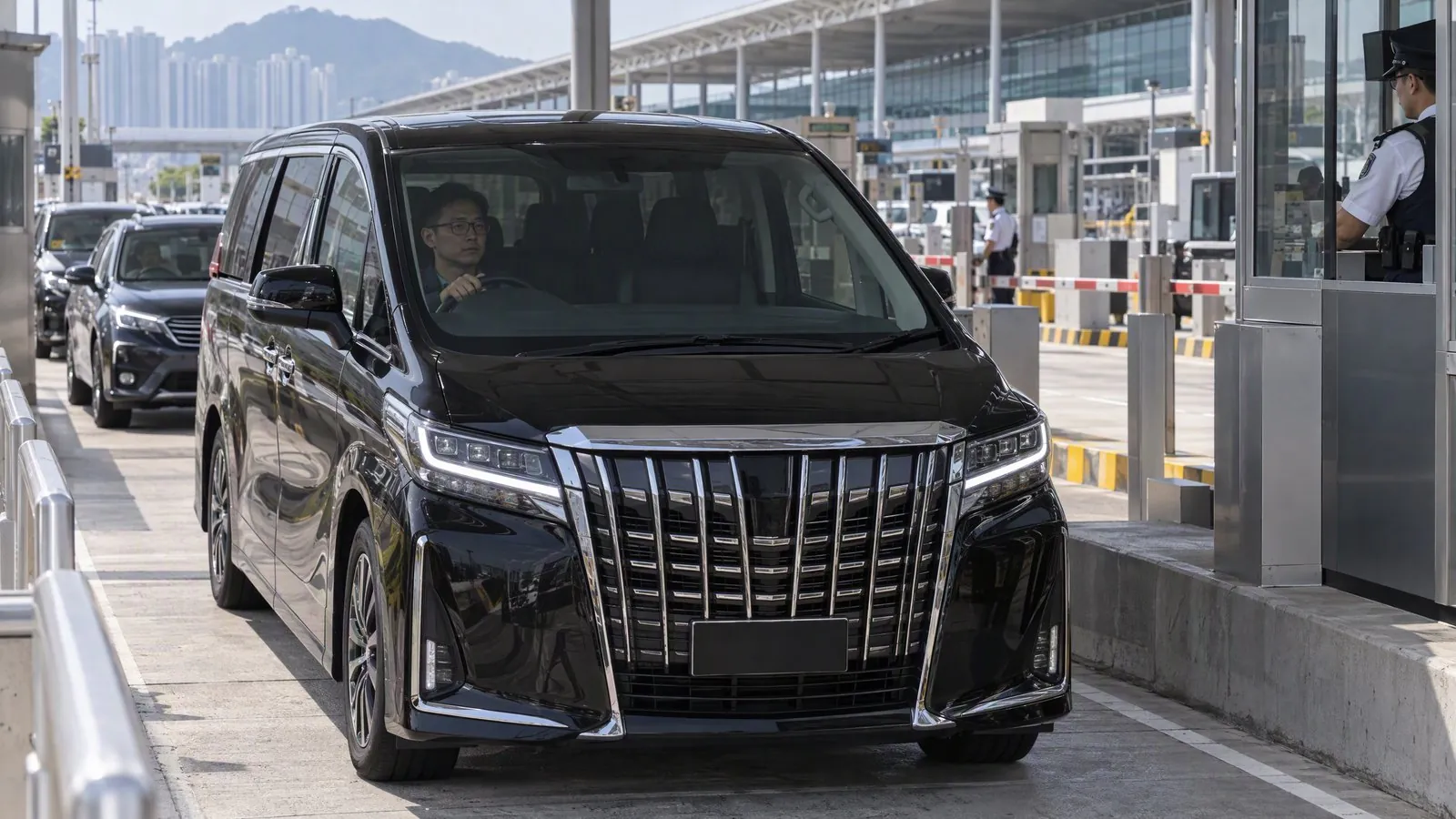
What changes once the three buffers are in the diary
With the three buffers written in, the schedule looks less tidy: departure moves earlier and the gaps between meetings widen. On the day, though, the difference is obvious. Even if one stage runs slower than expected, there is still something left to absorb it, the meeting can still start at the agreed time, and nobody has to start phoning round just before the car arrives. Building in a buffer is not being over-cautious; it is putting the least predictable stage where the itinerary can best afford it.
Buffers are not "the longer the better"
Buffers need to be allocated, not added to every stage. City driving is affected by road conditions and has the most give; the crossing depends on arrangements at the control point and is hard to predict; the walk from the drop-off to the meeting room is the most easily overlooked, yet it has the most direct effect on whether you are late. Put the most flexibility into the middle two stages, and write the pick-up, the estimated crossing and the arrival at the venue as three separate times rather than a single arrival time. If two cross-border legs fall on the same day, do not leave only a thin gap between them, or a delay on the first will land straight on the second. The more specific the schedule, the fewer changes on the day, which for a PA is worth more than any verbal assurance. Anything involving the crossing, documents or traffic controls is subject to the latest arrangements announced by the authorities and the organiser. Where an itinerary covers several people and several stops, Tiger Limo can sequence the transfers around the timetable you have written, so the buffers you allowed actually do their job.