

News & Updates
From a Hong Kong Hotel to a Shenzhen Office: Setting Pick-Up Times for Morning, Lunch and Evening Meetings

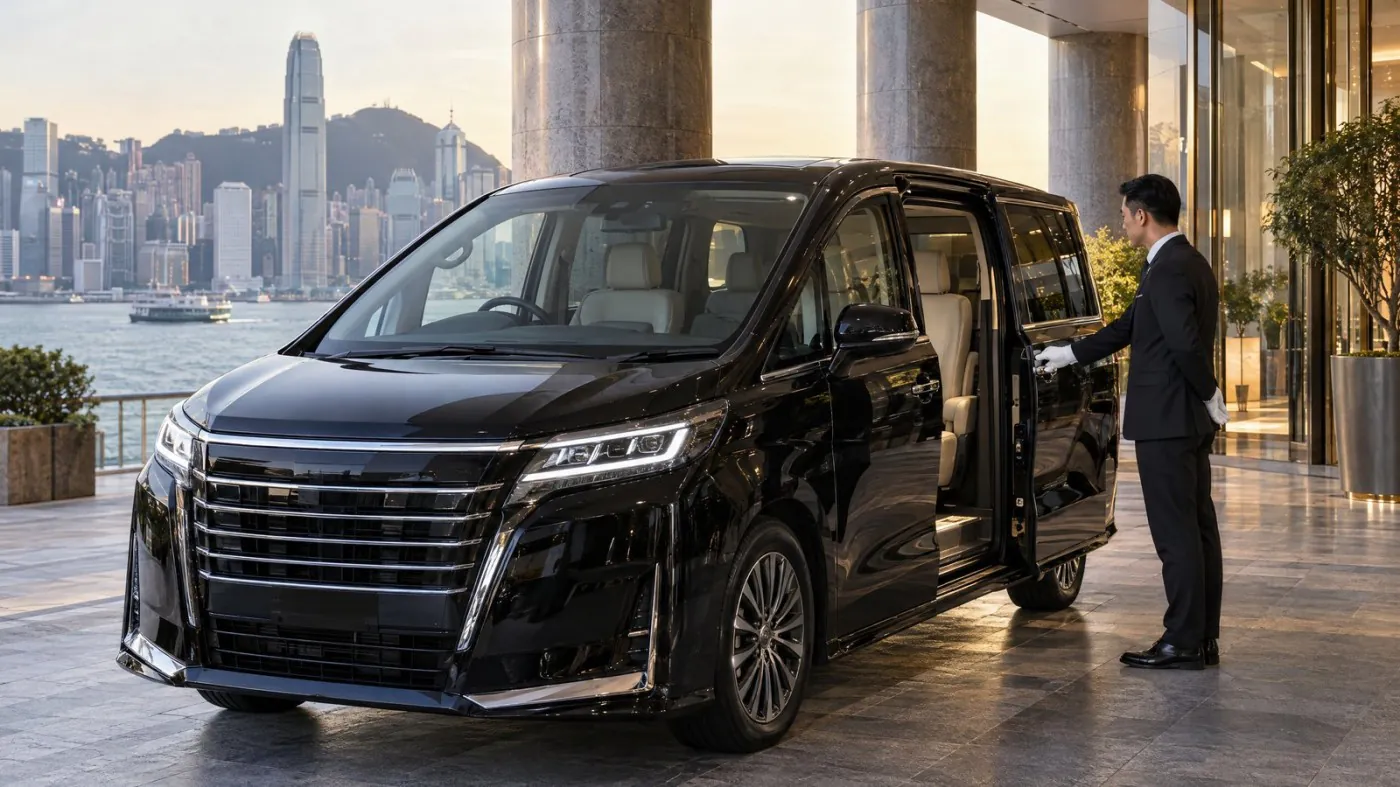
Going from a Hong Kong hotel to an office in Shenzhen, the most frequent problem is not the road but what time to agree for the pick-up. Book it too early and your guest sits in the car for an hour; too late and they arrive after the meeting has started, with everything after it squeezed. The safer method is to work backwards: fix the start time, then the latest arrival time, then the pick-up time, and finally add a buffer.
The Basic Order of Working Backwards
There are only four steps. First, confirm the official start time of the meeting. Second, confirm the latest arrival time, usually fifteen to twenty minutes before the start, since you need to get past reception, register and find the room. Third, estimate the walking and lift time from the drop-off point to the meeting room. Fourth, add a buffer for the border crossing, city traffic and the unexpected.
The advantage of this order is that it gathers uncertainty into a single buffer instead of relying on a feel for timings. The three situations below come up most often.
Morning Meetings: A Nine O'Clock Start Means the Earliest Pick-Up
Morning meetings call for the most caution. Crowds at the control points are concentrated in the morning, city roads are at peak, and both the crossing and the drive take longer than usual. If the meeting starts at nine, the latest arrival is around twenty to nine, and with walking time and a buffer added, the pick-up needs plenty of room. Earlier is better than later.
Another easily overlooked point: your guest has probably not had breakfast. Rather than asking them to sit in the hotel lobby half an hour early, remind them to eat something small beforehand, or arrange a simple breakfast in the car. If the journey includes collecting a second guest, work that pick-up into the calculation too.
Lunch Meetings: Half Past Twelve, and the Traffic That Slows You Down
A lunch meeting looks relaxed on paper but carries real risk. Morning crowds at the control point may be no lighter than for a morning meeting, and around midday the office districts are busy, with drop-off bays often queuing. If the meeting starts at half past twelve, the latest arrival is roughly ten past twelve, and the pick-up time again needs a generous buffer.
Another feature of lunch meetings is that guests often meet at a restaurant rather than an office, which makes the drop-off point worth describing in detail: a shopping centre, a hotel restaurant, or the ground floor of an office tower? If the restaurant is inside a shopping centre, give the entrance and the direction to walk once inside, because the centre is busy at midday and the driver may not stop close by. Traffic and venue arrangements that day are subject to the latest arrangements announced by the authorities.

Evening Meetings: Half Past Six, When Your Guest Is Already in Shenzhen
The most common evening meeting is one where the guest has been in Shenzhen all day and is simply moving from one point in the city to another. If, however, the guest is setting out from a Hong Kong hotel, note that early evening is also a cross-border peak, and the crossing can take longer.
For a meeting starting at half past six, the latest arrival is around ten past six, and the pick-up time needs to be set according to conditions that day. Your guest may also want to arrive early to talk beforehand; if so, add those fifteen minutes ahead of the arrival time rather than shaving the buffer. Evening meetings rarely finish on schedule, so the return journey is best discussed separately.
What to Send in One Go: Address, Contact and Latest Arrival Time
Working backwards only functions if the information is complete. When booking a car for a cross-border meeting, it helps to provide three things at once: the full address or the name of the building, the person or company being met, which helps the driver judge where to drop off, and the latest arrival time. If you know the floor of the meeting room, or that reception registration is required, mention that too.
With those three in hand, the driver can adjust the route according to actual conditions without repeated calls along the way. When Tiger Limo arranges business transfers from Hong Kong hotels to Shenzhen, it normally suggests a pick-up time based on the guest's meeting time and builds the buffer into the plan. Working backwards is not about cutting the timing as fine as possible, but about absorbing uncertainty in advance so that your guest can walk in unhurried.