

News & Updates
After the Hong Kong Beauty Fairs: What a Dual-Venue Week Should Leave Behind for Next Year


After the Show, What Really Matters Is the Record
From 10 to 13 November 2026, Cosmoprof Asia and the beauty supply chain fair ran concurrently at AsiaWorld-Expo and the Hong Kong Convention and Exhibition Centre. Four days on, the stands are down, the samples have been shipped and the business cards filed, and most people consider the matter closed. For the colleagues who handled hosting and transport, though, the time worth spending is a look back: how the cars actually ran, how people waited, and how the cargo moved.
This is not a checklist, but a review after the fact, with one purpose — so that next year's dual-venue shuttle does not start from zero.
Moving Between Two Venues: Why "On the Way" Is the Wrong Starting Point
The great illusion of a concurrent fair is that both venues are in Hong Kong, so one is on the way to the other. In reality AsiaWorld-Expo sits out by the airport and the HKCEC is in Wan Chai, and the distance between them is enough to knock the rhythm out of a whole day. The pattern we saw most often this year: a buyer finishes meetings at the HKCEC in the morning, heads for AsiaWorld-Expo in the afternoon, loses half an hour to the drive and the harbour crossing, and has to push back every appointment that follows.
Looking back, the problem was not the drive itself but that we scheduled the two venues as one itinerary. Next time, treat them as two separate days: each with its own drop-off point, its own buffer, its own contact person. The leg in between is not "on the way"; it is part of the programme and needs time set aside as such.
Samples and Documents: The Things That Go Missing in a Boot
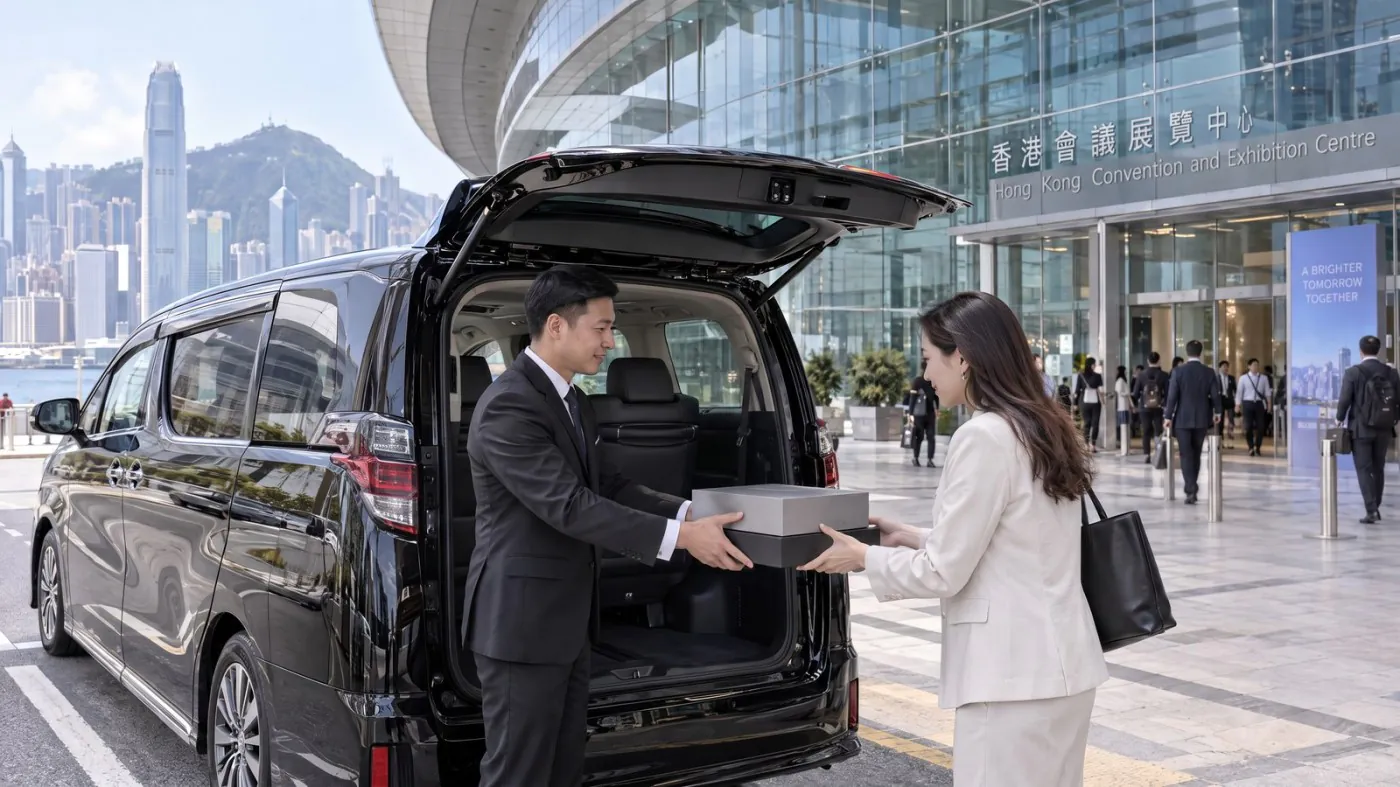
Samples at a beauty fair have a particular character: small, numerous and similarly packaged. This year, two boxes meant to go from the HKCEC to a client at AsiaWorld-Expo were only discovered in a car boot half a day later. On review, the fault was not the driver's; we had never said clearly which bag was travelling with whom.
Next year the fix is simple: before each car sets off, say in one sentence how many items are on board, which stand they belong to and who receives them on arrival. No system required — one message will do. The point is that it happens before departure, not after everyone has got out.
Client Visits: Making Transfers Something You Can Review
During a dual-venue week, buyer itineraries change constantly. Our experience this year was that change itself is not the danger; the danger is change that nobody knows about. On one occasion the same group of clients was booked by two colleagues to be at the same venue at different times, and an entire afternoon was lost.
So in the review I paid particular attention to how finely we record things. A note that says "client transfer, 11 November" is not enough; it should say what time, from where to where, how many people, whether samples were involved and which colleague accompanied them. Then, when next year's schedule is built, there are real durations to work from instead of memory. Memory after a fair is usually just an impression; a record can be replayed.
Handing Over to Next Year: Turning This Year's Chaos into Next Year's Route
The worst thing a post-event review can become is a round of blame. Holding two fairs at two venues in the same week is demanding on any transport plan, and a few small mix-ups are normal. The conclusions that actually help are only a few sentences long: treat the two venues as two separate journeys; say what is in the car and who receives it before departure; record things in enough detail to replay them.
The next time concurrent fairs land at two venues, we can pull out this year's records and see which time slots were tightest and which drop-off points were the most awkward, then put those real numbers into the planning. Tiger Limo approaches transfers during fair weeks the same way — first understanding your venue sequence and client timetable for the day, then building the itinerary around it, rather than cramming every appointment into a single route.