

News & Updates
Group Arrivals on Different Flights: How to Plan Waiting, Boarding Order and Split Departures at Hong Kong Airport

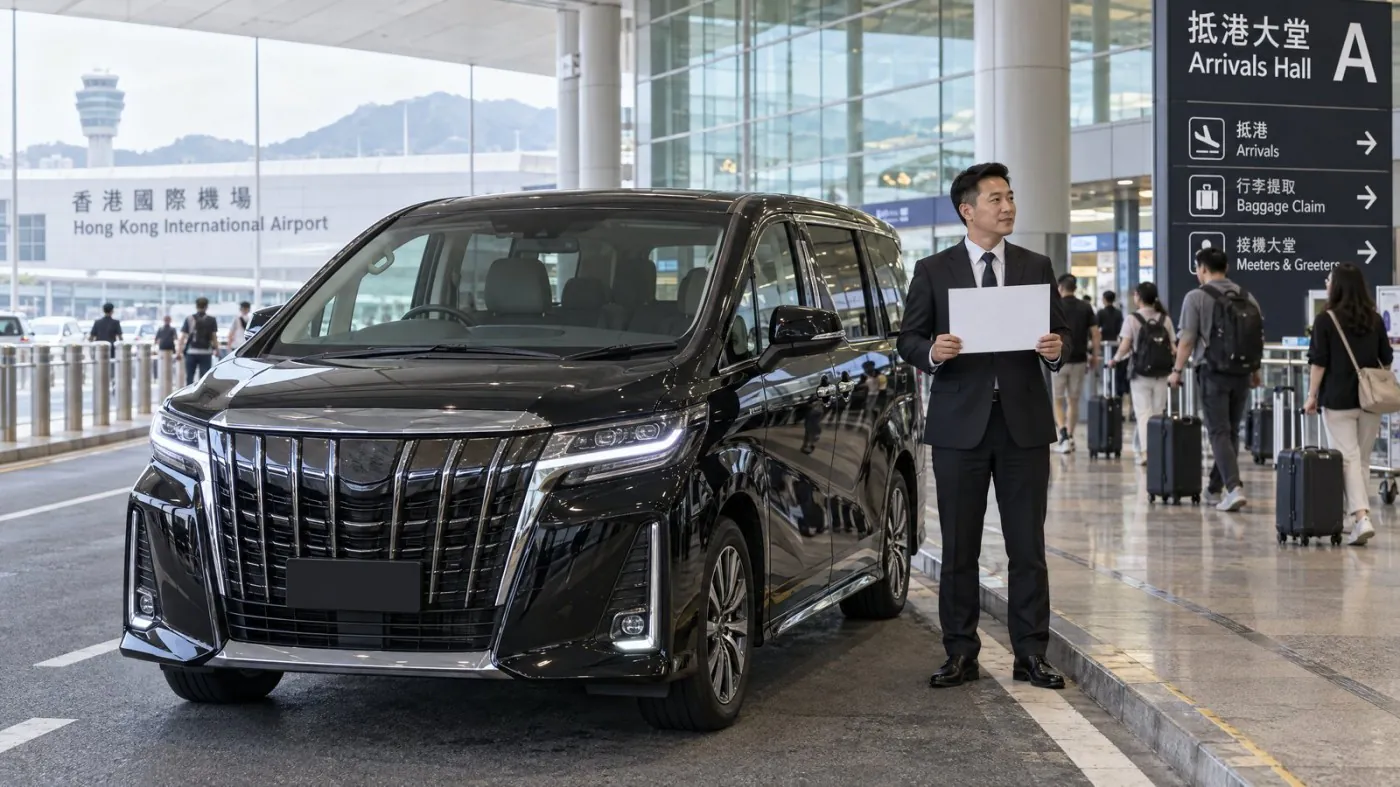
When a family or a group of colleagues travels together, the tickets are rarely booked on the same flight. One party lands in the morning, another an hour or two later, and someone else may arrive half a day behind. In that situation an airport pickup stops being a question of what time to send the car. It becomes a set of decisions: whether to wait, how long to wait, who boards first, and whether the group should leave in two waves.
The three scenarios below are worth treating separately, because the practical answers differ quite a lot.
Scenario One: Everyone on the Same Flight
This is the simplest case: one vehicle, one meeting time. Two details still need to be settled.
The first is the meeting point. The arrivals level at Hong Kong International Airport has several exits and a constant flow of people, so agree on one specific spot — beside a named exit, for example — rather than "we'll meet outside the doors". The second is luggage. Bags from the same flight can take a while to appear on the belt, so leave a little flexibility in the pickup time and avoid scheduling the next leg too tightly.
Our usual approach here: one meeting point, one person in charge of the group, one vehicle, and roughly half an hour of slack built into whatever comes next.
Scenario Two: Arrivals an Hour or Two Apart
This is where judgement matters most. Waiting means the early arrivals sit in the terminal for an hour or two; not waiting means two groups and two journeys, which changes both the cost and the logistics.
The more practical test is what comes next. If the next stop is the hotel and the timing is flexible, the early group can leave first and settle in while a second car collects the later arrivals — everyone travels comfortably. If the next stop is a meeting, a meal or a connection onwards to Shenzhen, the group will usually want to travel together, in which case the early arrivals are better off having something to eat and a wander in the terminal until everyone is through.
Remember that an arrival time is not a meeting time. The later flight still has to clear immigration and wait for bags, so the actual appearance in the arrivals hall may come some time after the scheduled landing. Agree on an approximate wait, and say in advance that if the delay passes a certain point, the group will switch to two separate departures.
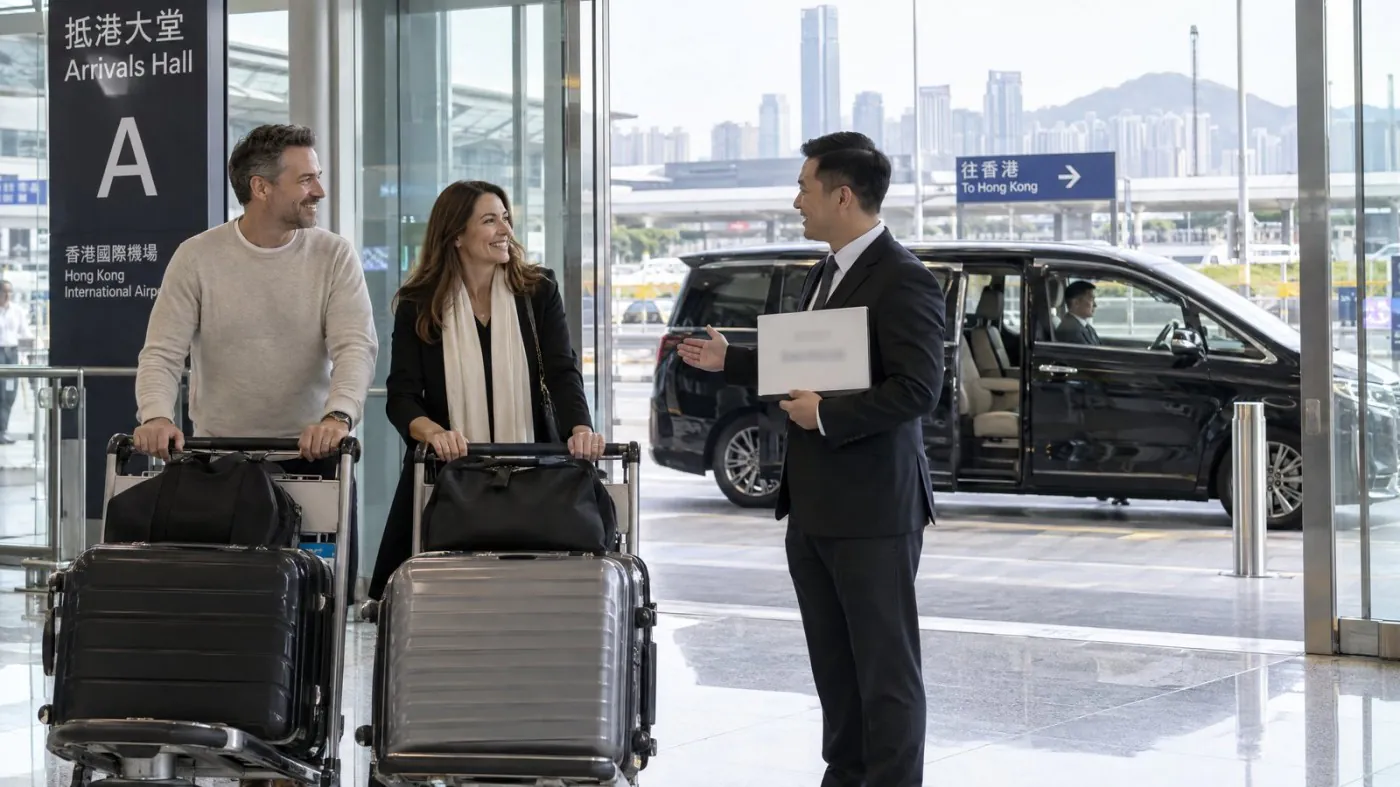
Scenario Three: Arrivals Half a Day Apart
Half a day apart and you are effectively dealing with two separate groups. Insisting on a single wait simply burns half a day for whoever landed first.
Split the list into two groups, each with its own meeting point, contact person and destination. The early group goes ahead; the later group is arranged separately. If both groups are ultimately heading to the same place, the first can settle in and the second can join them on arrival.
Splitting the party looks complicated on paper, but in practice it produces the fewest arguments, because neither group is sacrificing time for the other.
Matching Luggage, Headcount and Vehicle Type
When a group splits, luggage becomes the biggest variable. Ask in advance: how many large cases per group, whether there are strollers or sports equipment, and which bag belongs to whom. If luggage travels with its owner, every vehicle must physically accommodate it.
If one vehicle is making two runs — dropping one group and returning to the airport for the other — allow for the round trip in between. That works well when the gap is moderate, but traffic on the day can set off a chain of delays, so it suits days when nothing that follows is time-critical.
The Few Lines to Write Down Before You Book
Whichever scenario applies, it helps to put a few lines in writing before the pickup is arranged: flight numbers and arrival times, headcount and number of bags, the meeting point for each group, whether the group is willing to wait and roughly how long, who the contact is if the party splits, and the final destination.
With those details set out, both the driver and the operator can judge in advance how many vehicles are needed and in what order to sequence them. When Tiger Limo handles group airport pickups of this kind in Hong Kong, we usually group the passenger list by flight time and then confirm the waiting and splitting arrangements with the client. One last note: flight times change, so the actual meeting time is subject to the latest arrangements announced by the authorities on the day.