News & Updates
Child Car Seats and Elderly Passengers: What Families Ask Most Before Booking a Cross-Border Car

Travelling from Hong Kong to Shenzhen with a three-year-old and two parents in their seventies, the first question families ask is rarely about price. It is almost always the same one: do we need to bring our own child car seat? The answer involves two separate things — what the law requires, and how the trip is actually arranged. This guide walks through what families ask most, so everything can be settled before departure.
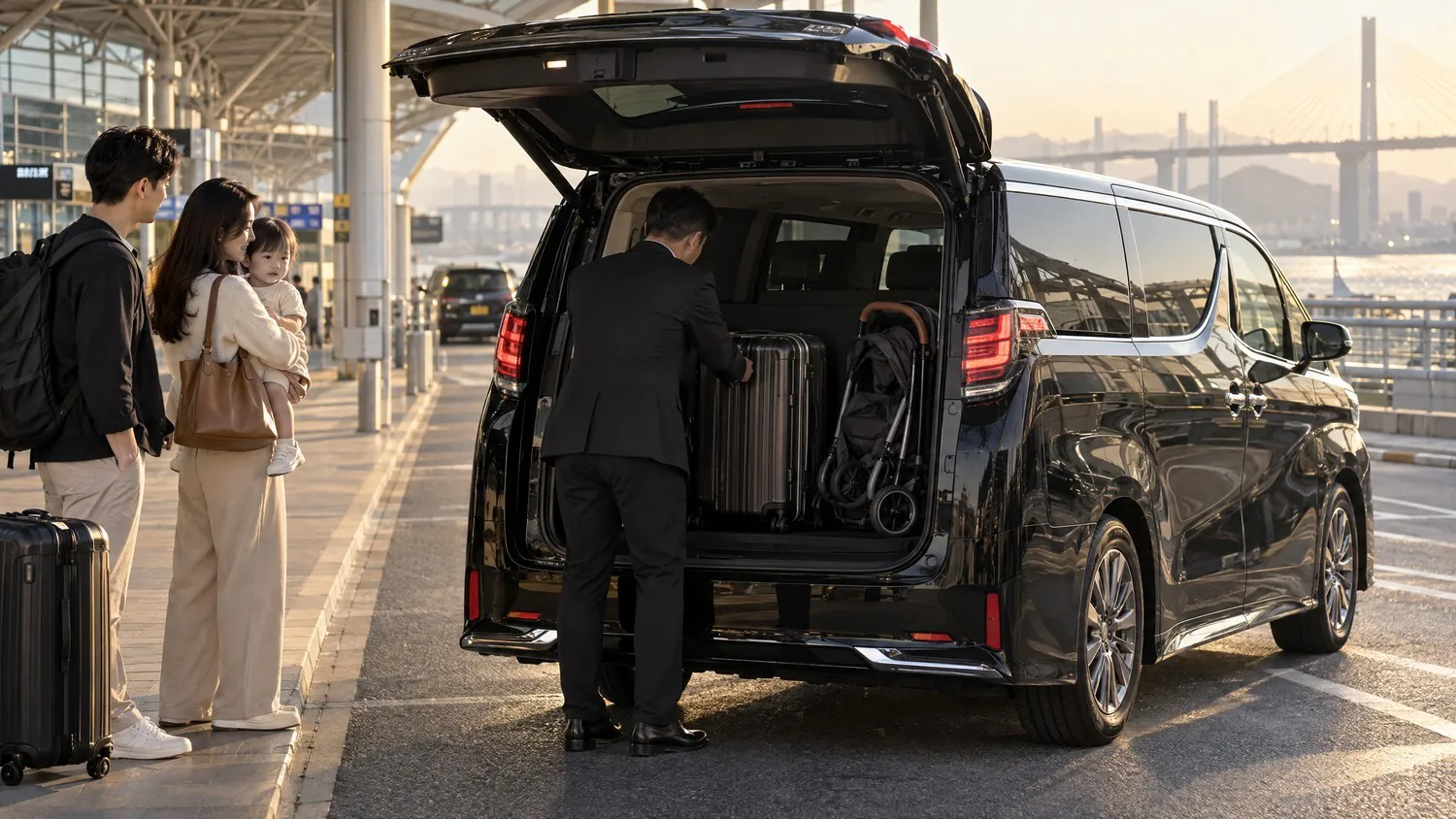
Figure 1. A chauffeur assists an elderly passenger while the family handles luggage and a stroller.
In law, a child in a cross-border car is treated the same as a child in a private car
Since 1 November 2025, children under eight years old must use an approved child restraint in a private car — in both the front and rear seats — unless they are already 1.35 metres tall. Passengers aged eight or above, or at least 1.35 metres tall, must use a child restraint or wear an adult seat belt.
The requirement applies to drivers of local and cross-border private cars alike. In other words, a child travelling in a cross-border car is covered by the same rule; a short trip across the border is not an exemption. Drivers who fail to comply may receive a fixed penalty notice of HK$230, and in serious cases the matter may be taken to court, with a maximum fine of HK$2,000.
When choosing equipment, age is only a reference point. What matters most is the height and weight range stated on the product, and whether it complies with a recognised standard such as GB 27887, UN Regulation No. 129, ECE Regulation No. 44 or AS/NZS 1754. Portable devices — seat belt adjusters, wearable restraint vests and booster seats — also meet the legal requirement, but because they have no side padding or backrest, their protection in a side impact is generally lower than that of a full child car seat.
Once you are through the border, the mainland rules differ again
In Shenzhen, children under twelve may not sit in the front passenger seat, and children under four travelling in a small or mini non-commercial passenger car must use a child car seat that complies with the national standard. Breaches carry a fine of RMB 300. On a single journey, the two sets of rules therefore look at different things: Hong Kong focuses on age and height, while Shenzhen also regulates where the child sits.
In practice, the simplest approach is to keep the child in the rear seat with appropriate restraint throughout the journey. That way there is no need to switch your thinking between Hong Kong roads, the border crossing and mainland roads.
| Comparison | Hong Kong | Shenzhen |
| Who it covers | Children under eight, or under 1.35 metres tall | Children under four (child car seat); children under twelve (front passenger seat) |
| Seating | Child restraint required in both the front and rear seats | Children under twelve may not sit in the front passenger seat |
| Penalty | HK$230 fixed penalty; up to HK$2,000 | RMB 300 fine |
Who provides the child car seat?
This is the second most common question. The ideal arrangement is for parents to bring the seat they use every day, already adjusted to the child's height and weight, because how well a seat fits directly affects how well it protects. A seat that has been in a collision may look undamaged while its internal structure is no longer reliable, so it should not be reused.
If bringing your own seat is not possible, raise it when booking. Our team will assess what can be arranged based on the child's age, height and weight, together with the vehicle assigned for that day. Tiger Limo makes recommendations according to the circumstances of each enquiry; the model, the number of seats and whether a seat can be arranged must be confirmed at the time of booking, because fixing methods and rear cabin space differ between vehicle types.
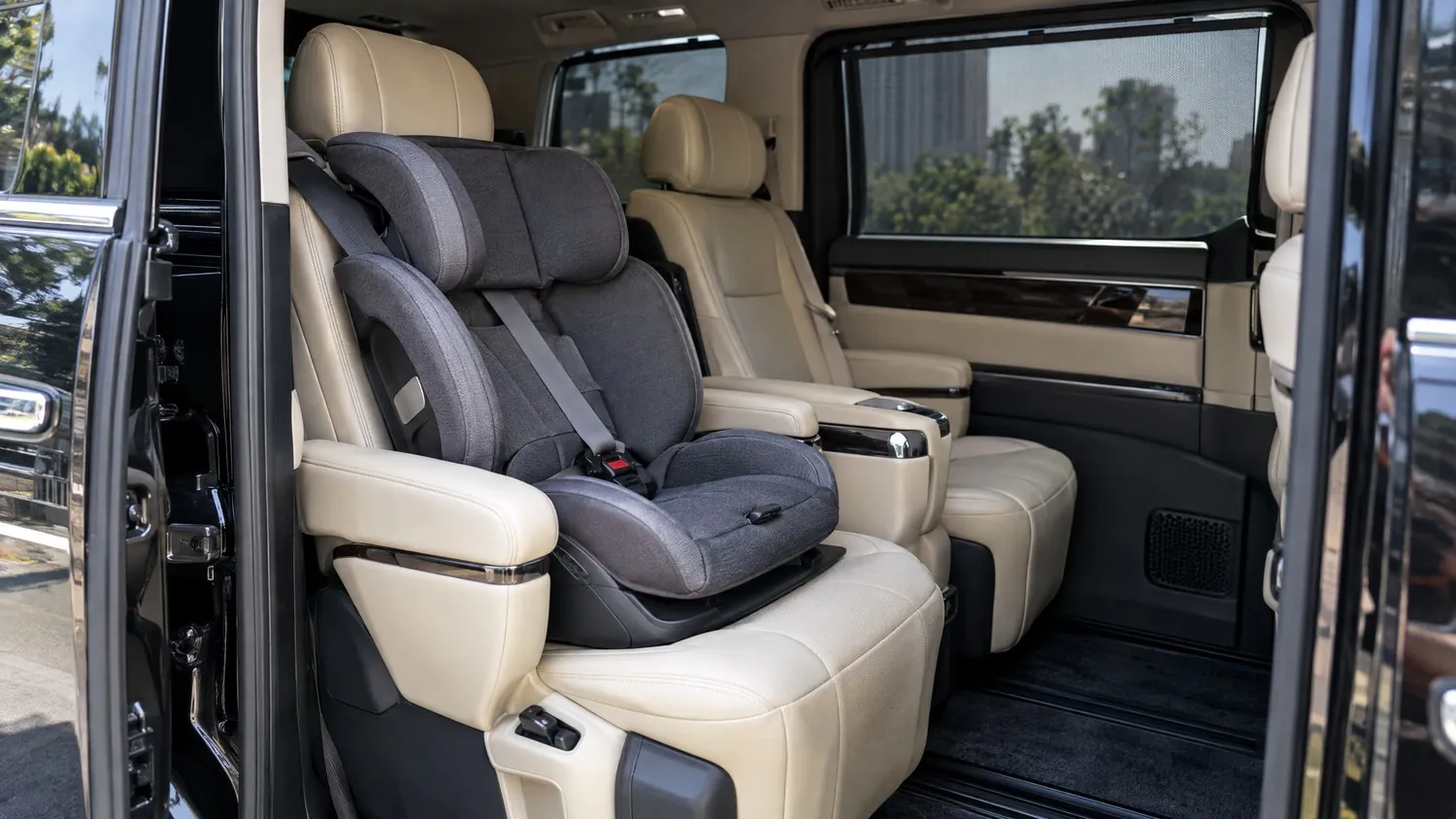
Figure 2. A child car seat should be installed in the rear according to the manufacturer's instructions, with the seat belt routed correctly.
Boarding is often the part that takes the longest for elderly passengers
The cabin floor of an MPV sits higher than that of an ordinary private car, and stepping up is the hardest part for a passenger with knee problems or a walking frame. Telling us a few details when you enquire lets the team plan ahead: whether the passenger needs a handrail or a supporting arm, whether a walking frame or wheelchair is used, whether they can step up into the cabin unaided, and whether a little extra time is needed at the door.
At the border, passengers may also need to step out and back into the vehicle while formalities are completed. For an elderly passenger this is a short but tiring stretch. Building buffer time into the itinerary is more practical than scheduling everything to the minute.
Mid-journey stops and luggage shape the choice of vehicle
A trip with children and elderly passengers moves at a different pace from a business trip. Restroom stops, feeding, meals and short breaks should all be listed when enquiring, because every stop changes the overall driving time.
On the luggage side, a stroller, nappy bag, wheelchair or walking frame all take up rear or boot space. In a seven-seater, once seven passengers are on board, the boot can hold only a limited amount of large luggage; with a stroller and several suitcases in the mix, seating may need to be rearranged or a larger vehicle used. It is better to state the number and type of bags when enquiring than to discover on the day that they do not fit.
Before departure, share these details in one go
- The age, height and weight of everyone travelling, especially children
- Whether a child restraint is needed, and whether you will bring your own
- Whether an elderly passenger needs support, a walking frame or a wheelchair
- The number and approximate size of suitcases and strollers
- Where and when you need to stop along the way
- Whether every traveller's cross-border documents are complete and still valid
Provide all of this at once and the team can recommend a suitable vehicle and itinerary based on passenger numbers, luggage and the needs of those travelling. Tiger Limo's cross-border car service offers the Toyota Alphard and the Mercedes-Benz V-Class, with recommendations based on the circumstances of each trip. No fixed prices are quoted here; please confirm the final itinerary and arrangements with our service team before departure.
References
[1] Government of the Hong Kong Special Administrative Region, Press Release: Children must use child restraints in private cars from 1 November; drivers may be fined (24 October 2025): https://www.info.gov.hk/gia/general/202510/24/P2025102300561.htm
[2] Hong Kong Transport Department: Child restraints (legal requirements, recognised standards, selection and use): https://www.td.gov.hk/tc/road_safety/crd/index.html
[3] Shenzhen Municipal People's Government: Article 13(6) of the Regulations of the Shenzhen Special Economic Zone on Penalties for Road Traffic Safety Violations (children under twelve may not sit in the front passenger seat; children under four must use a child car seat): https://www.sz.gov.cn/hdjl/ywzsk/gajjj/wfclyw/content/post_12354595.html