

News & Updates
2026 Greater Bay Area Cross-Border Travel Trends: The Weekend Northbound Pattern and Changes in Border Checkpoint Traffic

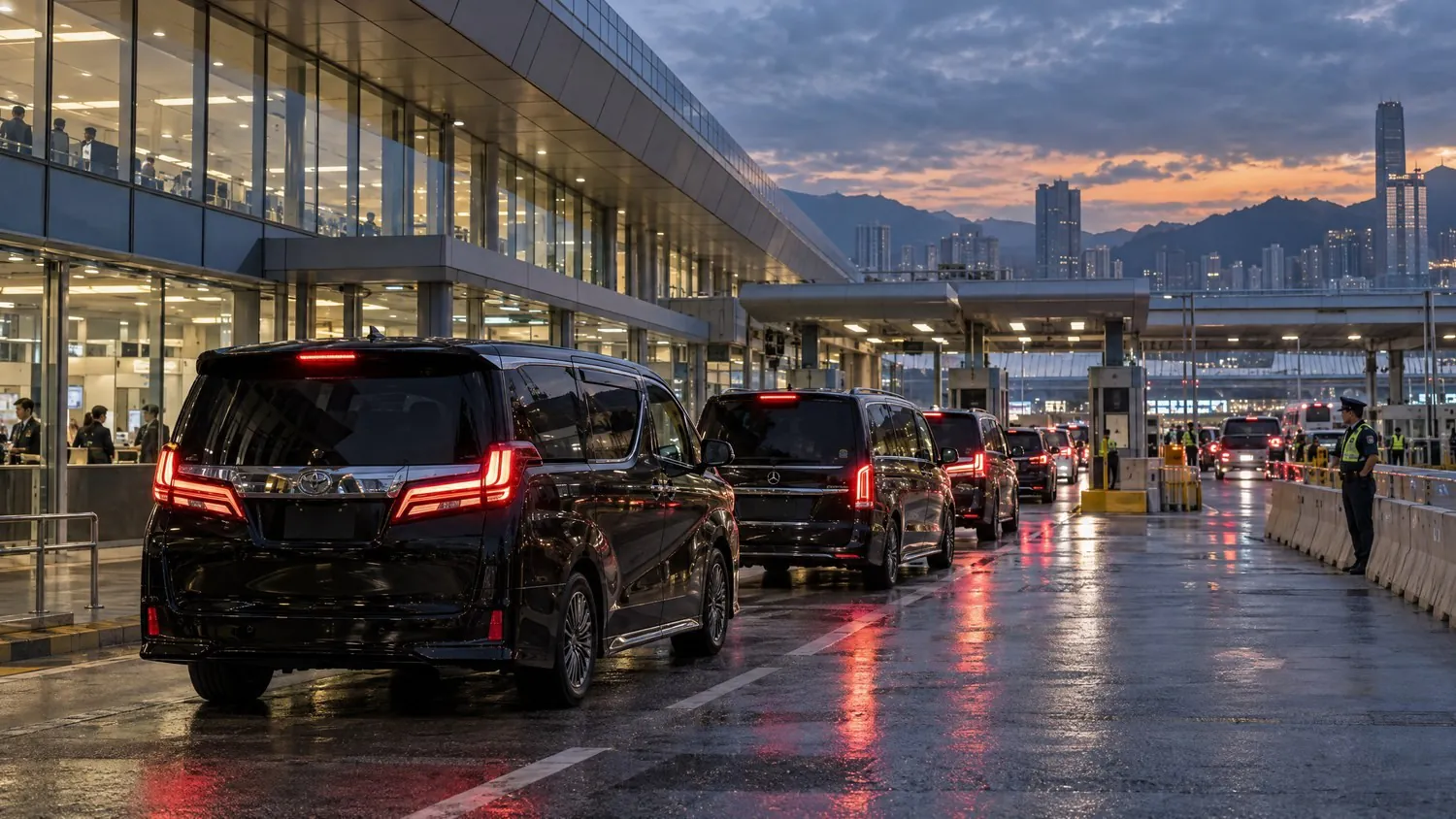
At 6:30am on 12 October 2026, the new Huanggang control point opened. By midnight, 79,500 travellers and 8,000 vehicles had passed through it on its first day.
Earlier the same year, Shenzhen's control points recorded their 200 millionth cross-border movement on 5 September, averaging 808,600 travellers a day, up 10.89% year on year and the highest volume of any city in the country. More than 60% of those travellers were Hong Kong residents.
Two hundred million crossings would have been a headline a decade ago. Today it is routine, and once cross-border travel becomes routine, the factor that shapes vehicle supply is no longer how many long holidays fall in a year. It is how many peaks arrive every single week. Long holidays come a handful of times; weekends come every seven days, and they land in the same few slots. The figures below come from the Immigration Department's daily statistics, read alongside port and vehicle traffic data.
The arrangements and the quotation for any individual journey depend on the date, the route, the number of passengers and pieces of luggage, the stops involved and conditions at the border that day. This article does not quote fixed prices; please confirm the final itinerary and quotation with the service team before departure.
Two hundred million crossings, and Hong Kong residents make up 60% of them
Shenzhen's traffic passed two milestones this year. Cumulative movements broke the 100 million mark on 2 May, 17 days earlier than the previous year. By 5 September they had passed 200 million, with a daily average of 808,600 travellers and year-on-year growth of 10.89%.
The same statistics show that Hong Kong residents account for more than 60% of that traffic. That share explains why, on any given weekend, pressure builds earlier on the Hong Kong side of the boundary than on the Shenzhen side.
Two fixed peaks, every week
Take an ordinary week in mid-September with no public holiday. According to Immigration Department data, 494,445 Hong Kong residents departed on Saturday 12 September, and 528,075 arrived back on Sunday 13 September. On the Tuesday and Wednesday of the same week, both directions sat at around 300,000.
In other words, roughly 60% more Hong Kong residents head north on a Saturday than on a weekday, and about 70% more return on a Sunday. Counting all travellers, the weekend sees around 1.16 to 1.20 million crossings a day against 830,000 to 840,000 on weekdays, a gap of about 40%.
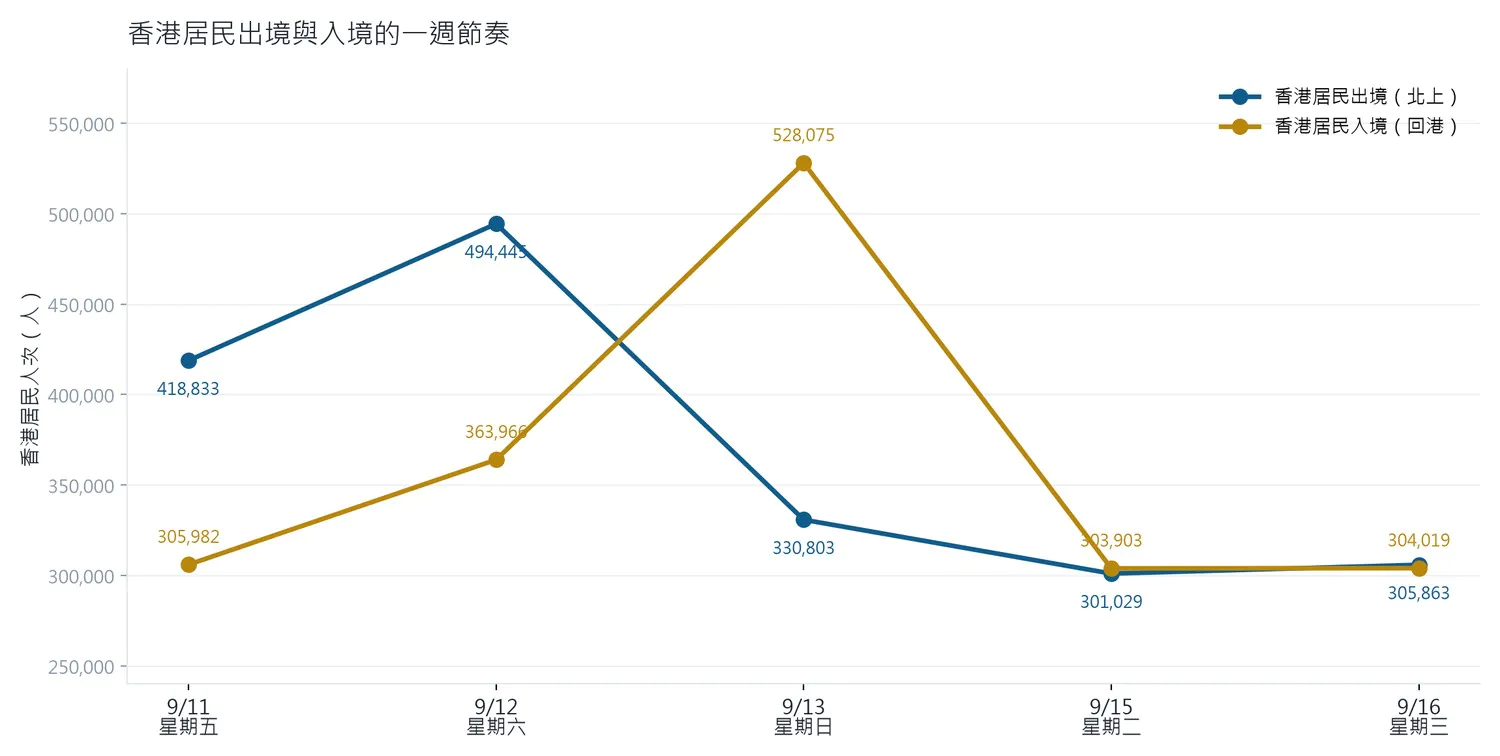
Figure 1. The weekly rhythm of Hong Kong resident departures and arrivals. Volume climbs from Friday evening, peaks on Saturday morning, and returns in force on Sunday afternoon and evening. Source: Immigration Department.
The shape repeats itself: the climb starts on Friday evening, Saturday morning is the outbound peak, Sunday afternoon into early evening brings the biggest inbound wave, and numbers fall away after 9pm. That rhythm matters for booking a car, because the same vehicle has two busy windows to cover in a single weekend.
How the ports divide the traffic
Compare Hong Kong resident departures on Saturday 12 September with Tuesday 15 September, port by port, and the growth rates diverge sharply, reflecting different passenger profiles.[
| Control point | Saturday (12 Sep) | Tuesday (15 Sep) | Change |
| Hong Kong-Zhuhai-Macao Bridge | 48,355 | 21,894 | +121% |
| Shenzhen Bay | 79,801 | 43,499 | +83% |
| Lok Ma Chau Spur Line | 99,049 | 60,775 | +63% |
| Lok Ma Chau (Huanggang) | 19,631 | 12,012 | +63% |
| Lo Wu | 126,276 | 78,986 | +60% |
| High Speed Rail West Kowloon | 27,853 | 17,858 | +56% |
| Heung Yuen Wai | 51,306 | 34,480 | +49% |
| Airport | 30,512 | 24,166 | +26% |
Table 1. Hong Kong resident departures: Saturday versus a weekday. Source: Immigration Department daily passenger statistics.
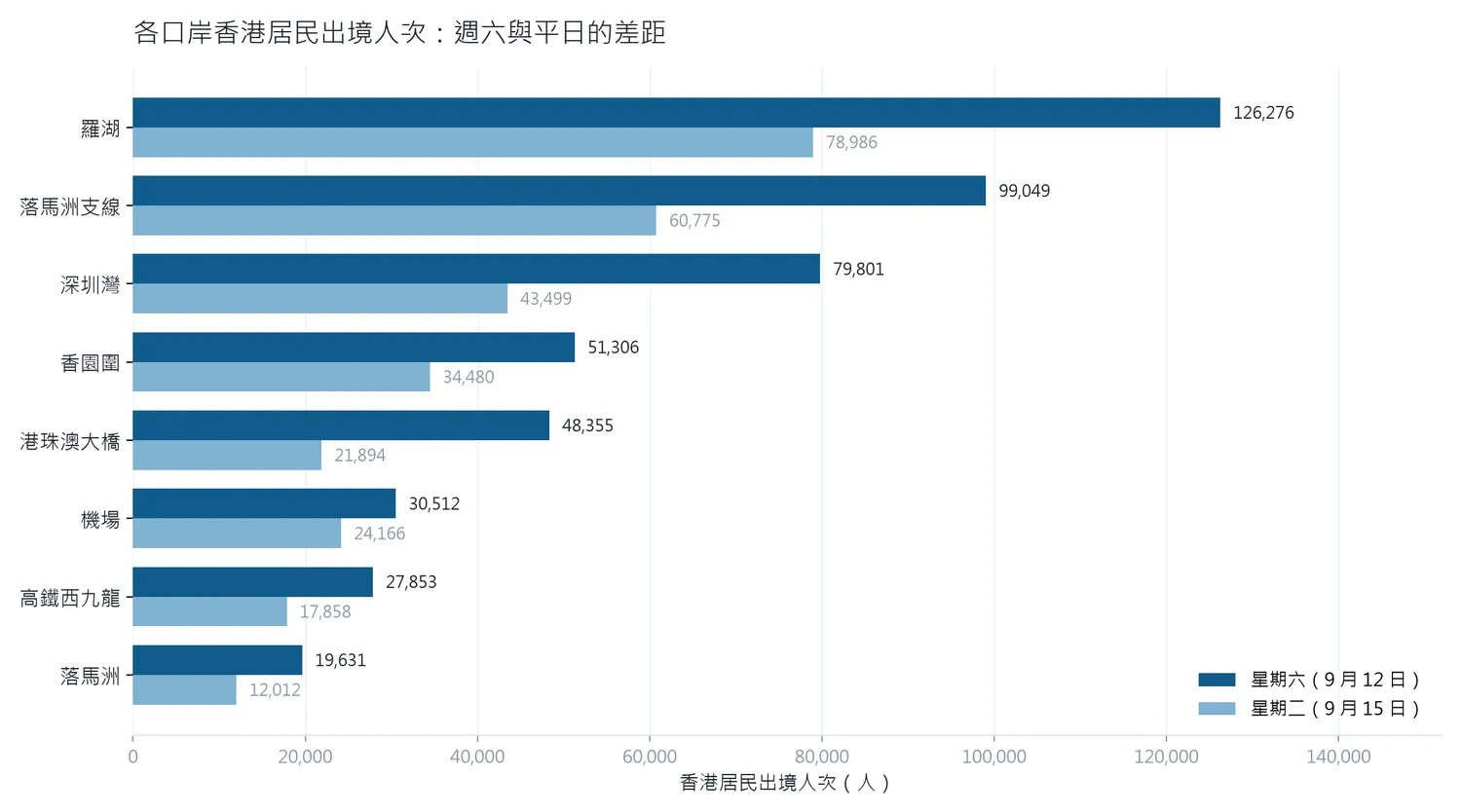
Figure 2. Hong Kong resident departures by control point: Saturday against a weekday.
The Hong Kong-Zhuhai-Macao Bridge more than doubled, which fits its role: it serves Zhuhai, Zhongshan and Macau, and it is the crossing most associated with weekend travel by private car and chartered vehicle. Shenzhen Bay and Heung Yuen Wai followed, and both are popular with families and shoppers, who tend to carry more luggage.
Lo Wu and the Lok Ma Chau Spur Line handle the largest volumes but grew more modestly, because they already carry heavy commuter and family-visit traffic on weekdays. The airport showed the smallest increase, around a quarter, since flight schedules rather than the day of the week determine its traffic.
Vehicle traffic is growing faster than foot traffic
Three years into the Northbound Travel for Hong Kong Vehicles scheme, more than 170,000 drivers and 148,000 vehicles had been registered with the border inspection authorities. Cumulative northbound trips by Hong Kong and Macau vehicles passed 10 million, now averaging about 11,000 a day.
The bridge figures are more direct. In the first quarter of 2026, the Zhuhai port of the Hong Kong-Zhuhai-Macao Bridge handled more than 8 million travellers and 1.73 million vehicle movements, both records for the period.[9] Over Chinese New Year, the bridge set a new single-day vehicle record on three consecutive days between 19 and 21 February, peaking at 29,500 vehicles.
Policy has moved with it. Since September 2025, northbound Hong Kong vehicles no longer need a booking on Tuesdays and Wednesdays, except on designated dates; and from 25 July 2026, the daily quota for southbound Guangdong vehicles entering Hong Kong rose from 100 to 200.
One practical consequence: weekend congestion at land control points comes mainly from private and cross-border vehicles rather than buses or rail. That makes crossing times on weekends less predictable than on weekdays.
From quick trips to longer stays
What people do on these trips is changing too. Research from the Chinese University of Hong Kong's Faculty of Social Science found that spending by Hong Kong residents on the mainland has spread from Shenzhen and Guangzhou to cities such as Zhongshan and Jiangmen, and further afield to Chongqing and Changsha. A Visa survey found that 49% of Hong Kong residents travel within the Greater Bay Area weekly or monthly, with Shenzhen (60%), Macau (40%) and Guangzhou (36%) the most popular destinations.
Length of stay is another shift. Market observers describe a move away from short, fast trips towards longer, deeper visits, with more days and deeper spending.[15] High-speed rail data points the same way: 2.638 million cross-border passengers in January 2026, with weekends accounting for 31.1%.
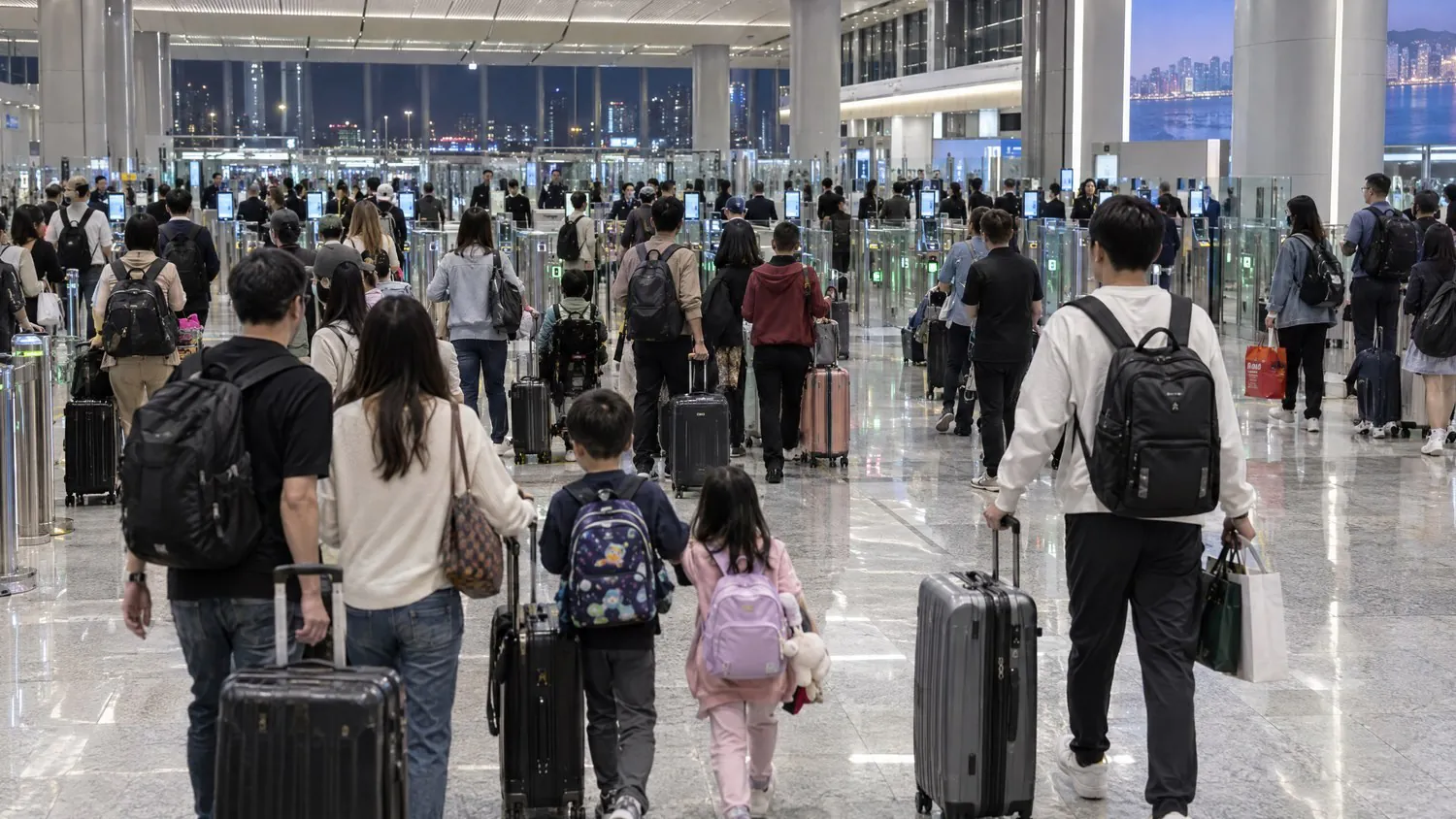
Figure 3. At weekend and holiday departure halls, the share of family and shopping travellers rises noticeably.
When an itinerary turns from a same-day shopping run into a multi-stop trip over several days with luggage, demand for door-to-door transfers rises with it. And once luggage grows, choosing a vehicle is no longer just a question of counting seats.
Five practical consequences for planning a trip
Departure time. Outbound volume starts building on Friday evening and peaks on Saturday morning. Leaving on Saturday afternoon is often easier than leaving in the morning.
Return time. The inbound peak runs from Sunday afternoon into early evening and eases after 9pm. Shifting a return by two or three hours can make a visible difference at the border.
Choice of control point. For Zhuhai, Zhongshan and Macau, the bridge is usually the natural option; for Nanshan and Baoan in Shenzhen, Shenzhen Bay; for Futian and Luohu, the high-speed rail terminus at West Kowloon, Lo Wu or the Lok Ma Chau Spur Line. The same journey can differ by more than half an hour door to door depending on the crossing.
Luggage and passenger numbers. Longer trips and shopping trips mean more bags. Vehicle choice should follow the number and size of pieces, not just the number of passengers, and items such as strollers, wheelchairs, golf bags or sample cases should always be declared in advance.
Booking lead time. Weekend and holiday slots are the tightest. Supplying the date, time, route, passenger and luggage details, stops and vehicle preference in one go makes scheduling much smoother.
The dates ahead
Several periods over the next two months will push demand up noticeably, so it is worth leaving some flexibility in any itinerary.
| Dates | Event | Effect on car demand |
| 17-19 Oct | Chung Yeung holiday (18 Oct, with 19 Oct as the substitute day off) | A three-day break; grave-visiting and short northbound trips cluster |
| 29 Oct - 1 Nov | Hong Kong Wine and Dine Festival | Traffic pressure around the Central waterfront at closing time |
| 19-22 Nov | Macau Grand Prix | Track closures in Macau; cross-border demand concentrates |
| 20 Nov - 6 Dec | Macau Food Festival | More same-day Macau trips at weekends |
| 26-28 Nov | CHTF, Shenzhen | Business transfers to the Baoan exhibition centre rise |
| 27 Nov - 6 Dec | Guangzhou International Auto Show | More business travel and hotel-to-venue transfers in Guangzhou |
| 6 Dec | Shenzhen Marathon | Road closures; early-morning and post-race transfers concentrate |
| 7-13 Dec | Airshow China, Zhuhai | Traffic controls in Zhuhai; cross-border trips need earlier planning |
| 22 and 25 Dec | Winter Solstice and Christmas | Family visits and northbound shopping peak; bookings tighten |
Table 2. Key dates over the next two months. Dates follow the organisers' announcements.
Conclusion
Cross-border travel in 2026 is no longer an exception that happens a few times a year. It is a system that runs every week. For travellers, understanding the weekly rhythm turns queuing time back into itinerary time; for arranging a car, explaining the details in advance is far more useful than looking for one at short notice.
Tiger Limo provides door-to-door cross-border transfers between Hong Kong, mainland China and Macau, and will recommend a suitable vehicle, including the Toyota Alphard or the Mercedes-Benz V-Class, based on the itinerary, passenger numbers, luggage and stops. To start, simply send the date, route, passenger and luggage details, stops and vehicle preference, and the team will take it from there.
[1] 大灣區之聲:新皇崗口岸首日出入境人員超 7.9 萬人次,周末或迎客流高峰(2026 年 10 月 13 日)https://www.cnbayarea.org.cn/news/focus/content/post_1340533.html
[2] 文匯報:深圳口岸客流突破 2 億人次!香港居民佔逾六成(2026 年 9 月 7 日)https://www.wenweipo.com/a/202609/07/AP6a9e5686e4b01d54a2822abf.html
[3] 入境事務處:出入境人次統計數字(2026 年 9 月 12 日)https://www.immd.gov.hk/hkt/facts/passenger-statistics.html?d=20260912
[4] 入境事務處:出入境人次統計數字(2026 年 9 月 13 日)https://www.immd.gov.hk/hkt/facts/passenger-statistics.html?d=20260913
[5] 入境事務處:出入境人次統計數字(2026 年 9 月 15 日)https://www.immd.gov.hk/hkt/facts/passenger-statistics.html?d=20260915
[6] 入境事務處:出入境人次統計數字(2026 年 9 月 16 日)https://www.immd.gov.hk/hkt/facts/passenger-statistics.html?d=20260916
[7] 香港商報:「港車北上」三周年 港珠澳大橋出入境車輛超 520 萬輛次(2026 年 7 月 1 日)https://www.hkcd.com.hk/content_app/2026-07/01/content_8762646.html
[8] 粵港澳大灣區門戶網:Hong Kong, Macao vehicles surpass 10 million northbound trips(2026 年 5 月 27 日)https://www.cnbayarea.org.cn/english/News/content/post_1328080.html
[9] 人民網:港珠澳大橋第一季度客流車流創同期新高(2026 年 4 月 2 日)http://gd.people.com.cn/BIG5/n2/2026/0402/c123932-41541724.html
[10] 21 世紀經濟報道:2.95 萬車次!港珠澳大橋春節假期單日車流量連創新高(2026 年 2 月 22 日)https://www.21jingji.com/article/20260222/herald/c4eb80f50d34255757d8a0b032b23172.html
[11] 港車北上:預約出行 https://www.hzmbqfs.gov.hk/tc/BookingForTravel/
[12] 運輸署:粵車南下 預約出行 https://www.td.gov.hk/tc/public_services/licences_and_permits/southboundtravel/stfgveiua/bft/index.html
[13] 香港中文大學社會科學院:「港人北上及本地消費形態」研究 https://socsc.cuhk.edu.hk/tc/voicedetails/research-release-on-hong-kong-travelers-in-mainland-china-official-data-e-wallet-data-model-analysis-reveals-hong-kong-residents-mainland-consumption-trends/
[14] Visa:49% 港人慣常大灣區出行 深圳最受歡迎(2026 年 6 月 25 日)https://itpromag.com/2026/06/25/visa-gba-26/
[15] 證券時報:從「買貨」到「買體驗」,港人北上消費升級記(2026 年 4 月 10 日)https://www.stcn.com/article/detail/3740377.html
[16] 大公文匯:大灣區融合加速 廣深港高鐵 2026 年跨境客流「開門紅」(2026 年 2 月 1 日)https://www.tkww.hk/a/202602/01/AP697f0595e4b0aa6cbcd3d83b.html
Vehicle lanes at a cross-border control point during a weekend queue, a familiar sight in 2026.